
Different universal joint types exist because driveline systems don’t all work under the same conditions. Some need to handle higher torque, others require smoother operation, and many must perform reliably at different operating angles.
If the U-joint type doesn’t match the application, problems like vibration, noise, or faster wear often show up much earlier than expected. That’s why understanding the differences between U-joint types is key before making a selection. This article breaks down the main types and their real-world applications to help you choose more confidently.
Table of Contents
1. Single (Cross-Type) Universal Joint
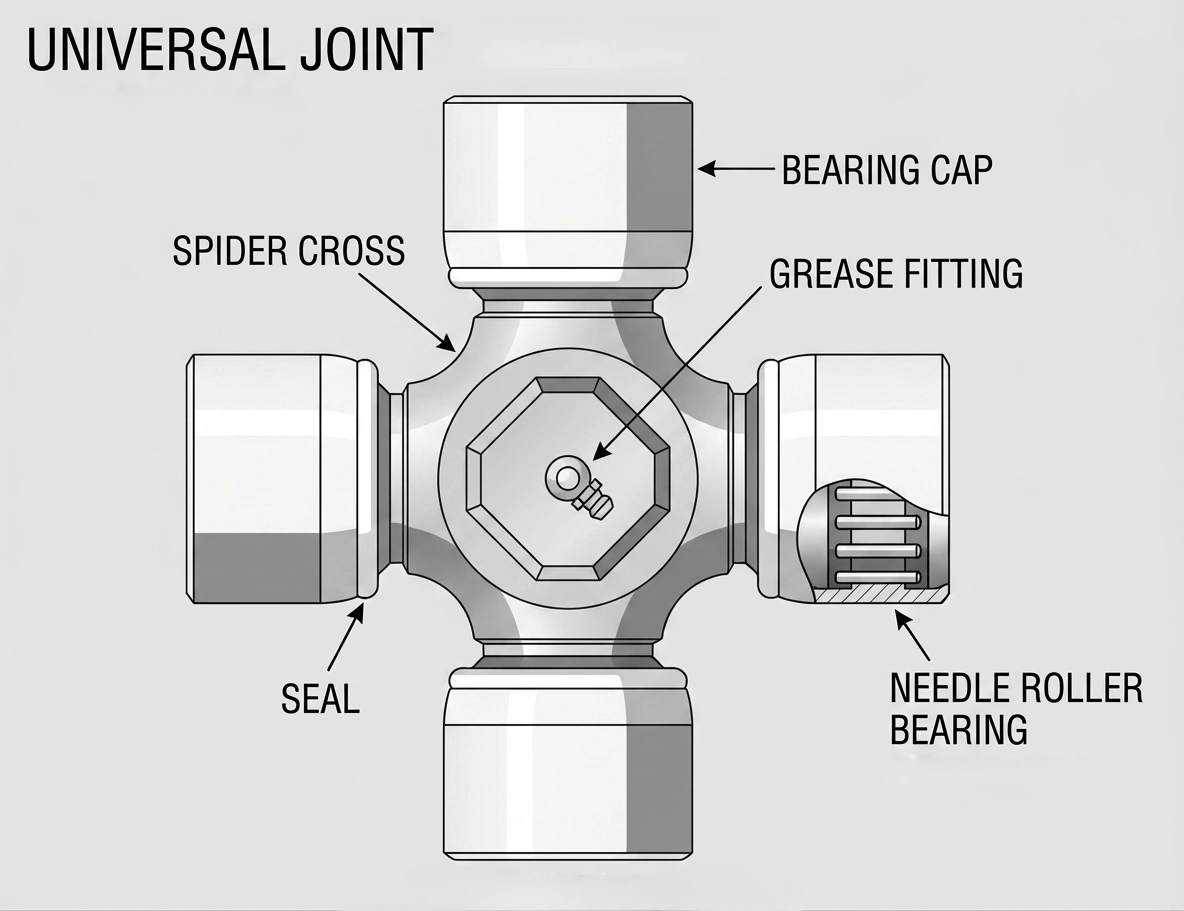
The single universal joint is the most traditional and widely used U-joint design, also known as the cross-type universal joint. It consists of two yokes connected by a cross-shaped trunnion, allowing torque to be transmitted even when the input and output shafts are not perfectly aligned. As the joint rotates, the cross pivots inside the yokes, enabling angular motion while transferring power through rolling contact bearings.
Pros
- Simple and mature design with proven reliability
- Good torque capacity depending on size series
- Easy maintenance and replacement
Cons
- Inherent speed fluctuation during rotation
- Performance decreases at higher operating angles
- Requires proper alignment to minimize vibration
Common applications: Rear-wheel drive sedan driveshafts (e.g., Toyota Camry), pickup truck driveshafts (e.g., Ford F-150), heavy truck driveshafts (e.g., Ram 2500), and agricultural PTO shafts (e.g., John Deere tractors).
2. Double Cardan Joint (Double Universal Joint )
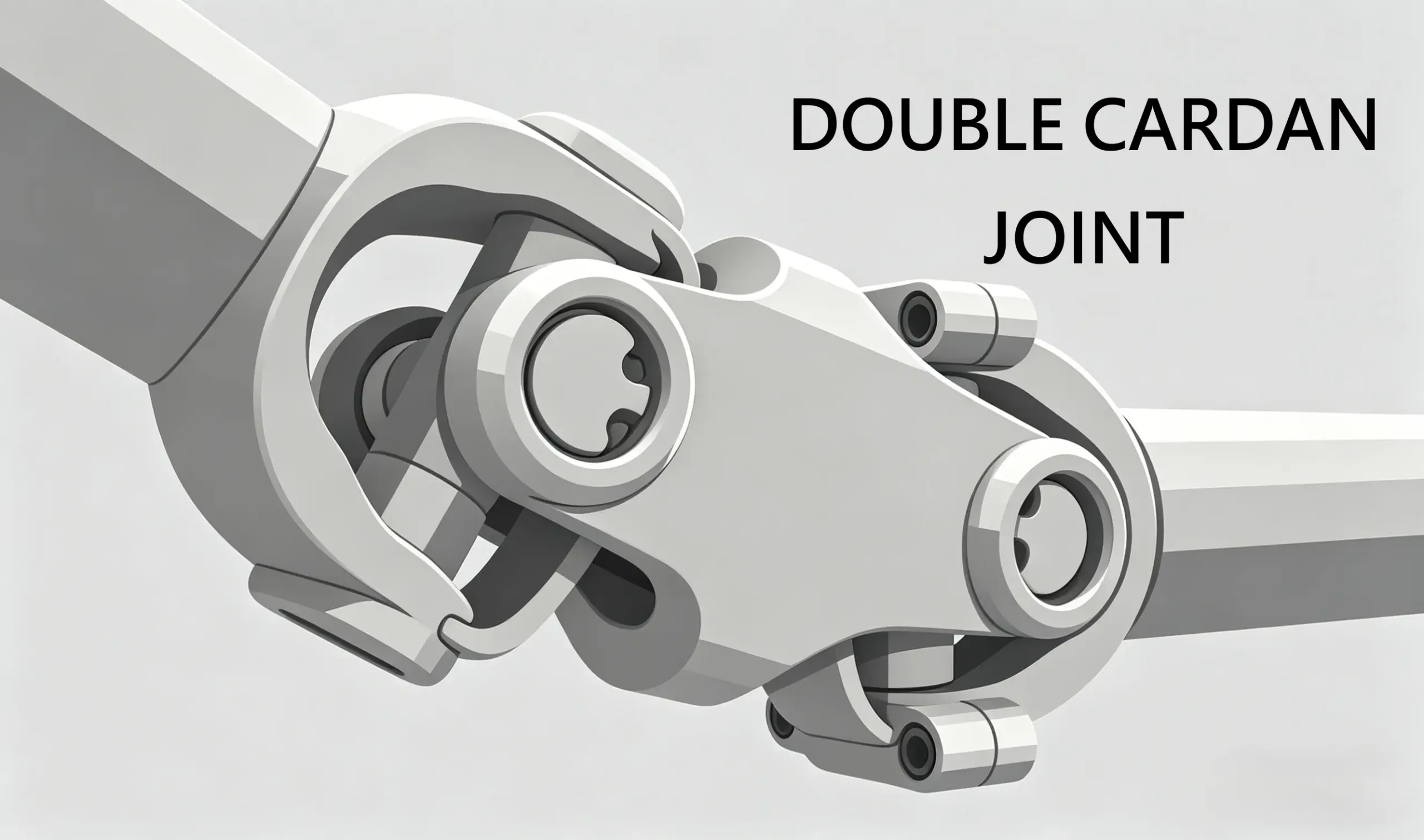
The double Cardan joint is composed of two cross-type universal joints connected by a centering ball and socket assembly. This configuration allows the two joints to work together in a phased arrangement, which helps smooth out the speed fluctuation inherent in a single U-joint and achieves near-constant velocity output. It is especially effective in driveline systems that operate at larger angles while still requiring stable and smooth power delivery.
Pros
- Near-constant velocity operation for smoother rotation
- Better performance at higher operating angles
- Reduced vibration compared to single U-joint setups
Cons
- More complex structure with higher cost
- Requires precise assembly and balancing
- Larger size may limit installation space and packaging flexibility
Common applications: Front driveshafts on lifted off-road vehicles such as Jeep Wrangler JK/JL (2-inch or higher lifts), rear driveshafts on lifted Toyota Land Cruiser 80 Series, and front driveshafts on four-wheel drive pickups like the Ford F-250 Super Duty.
3. Constant Velocity (CV) Joint
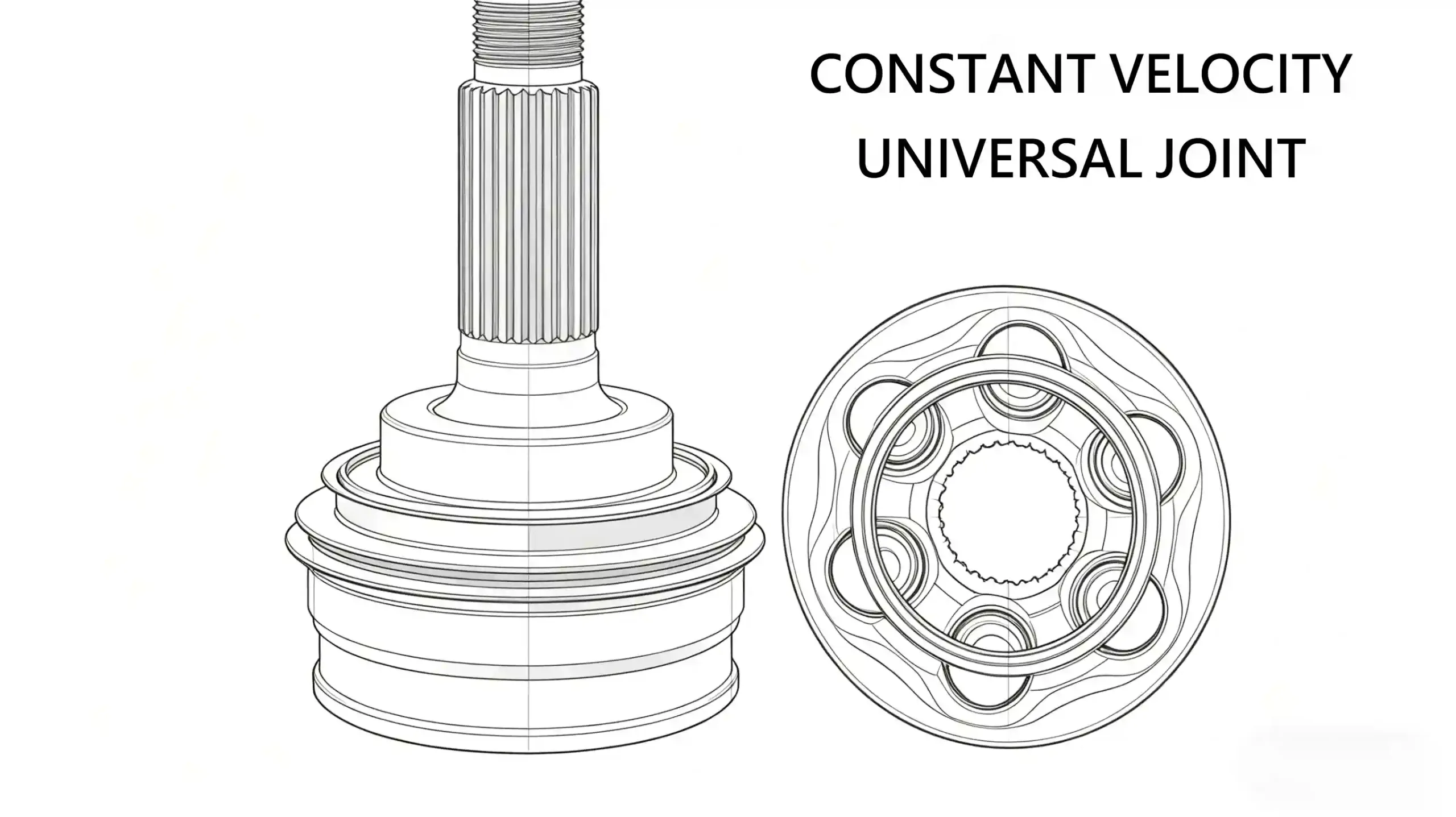
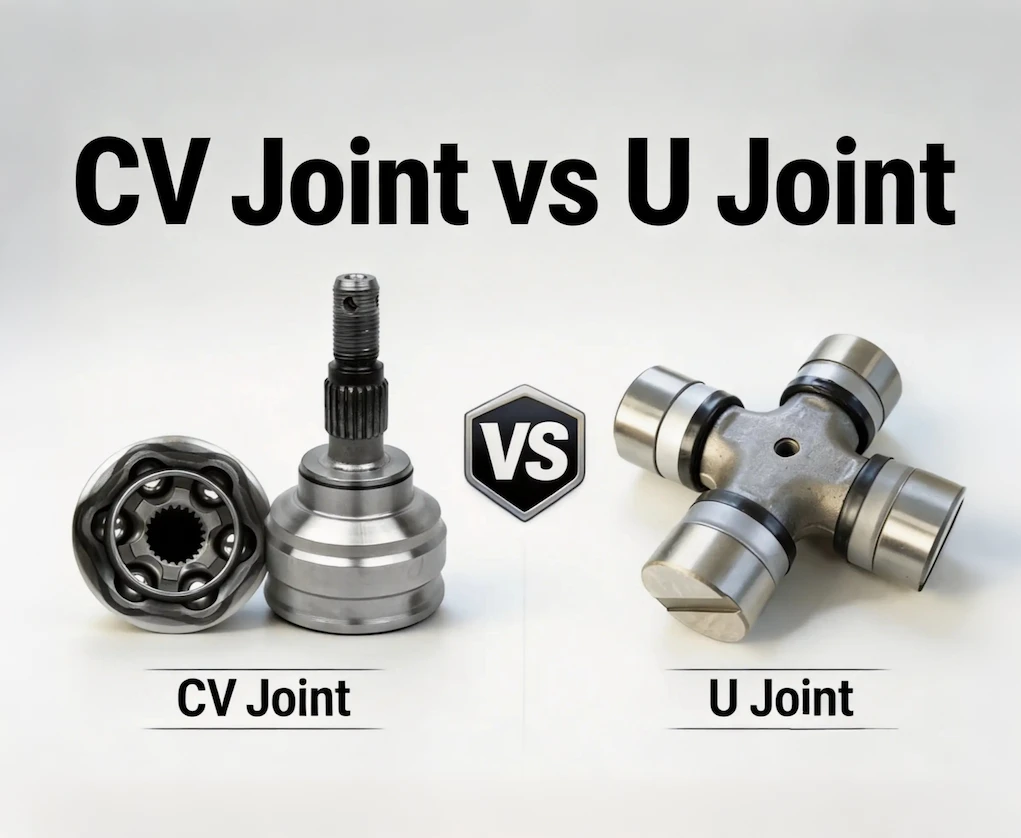
The constant-velocity joint (CV joint) connects two rotating shafts, allowing them to operate at the same speed even when angled to each other. It uses steel balls guided by a cage between an inner race and outer housing to transmit torque smoothly. CV joints are widely used in front-wheel-drive vehicles, where they handle both steering and suspension movements.
CV Joint vs Universal Joint: The cross-type universal joint causes speed fluctuations when angled, while the CV joint delivers constant velocity, reducing vibration and wear. However, CV joints cost more and need better sealing. Cross-type U-joints are simpler, more durable, and commonly used in trucks and heavy equipment.
Pros
- Maintains nearly constant velocity for smooth operation
- Well-suited for steering and suspension movement in FWD/AWD systems
- Compact design for independent front axle integration
Cons
- More sensitive to seal damage and grease contamination
- Higher manufacturing cost compared to cross-type U-joints
- Not designed for extreme heavy-duty torque applications
Common applications: Front-wheel drive half-shafts such as the outer CV joint and inner tripod joint on Honda Civic (2016-2021), half-shafts on Toyota Camry (2018-2024), and front half-shafts on premium SUVs like the Audi Q5 and BMW X5.
4. Ball and Trunnion Universal Joint
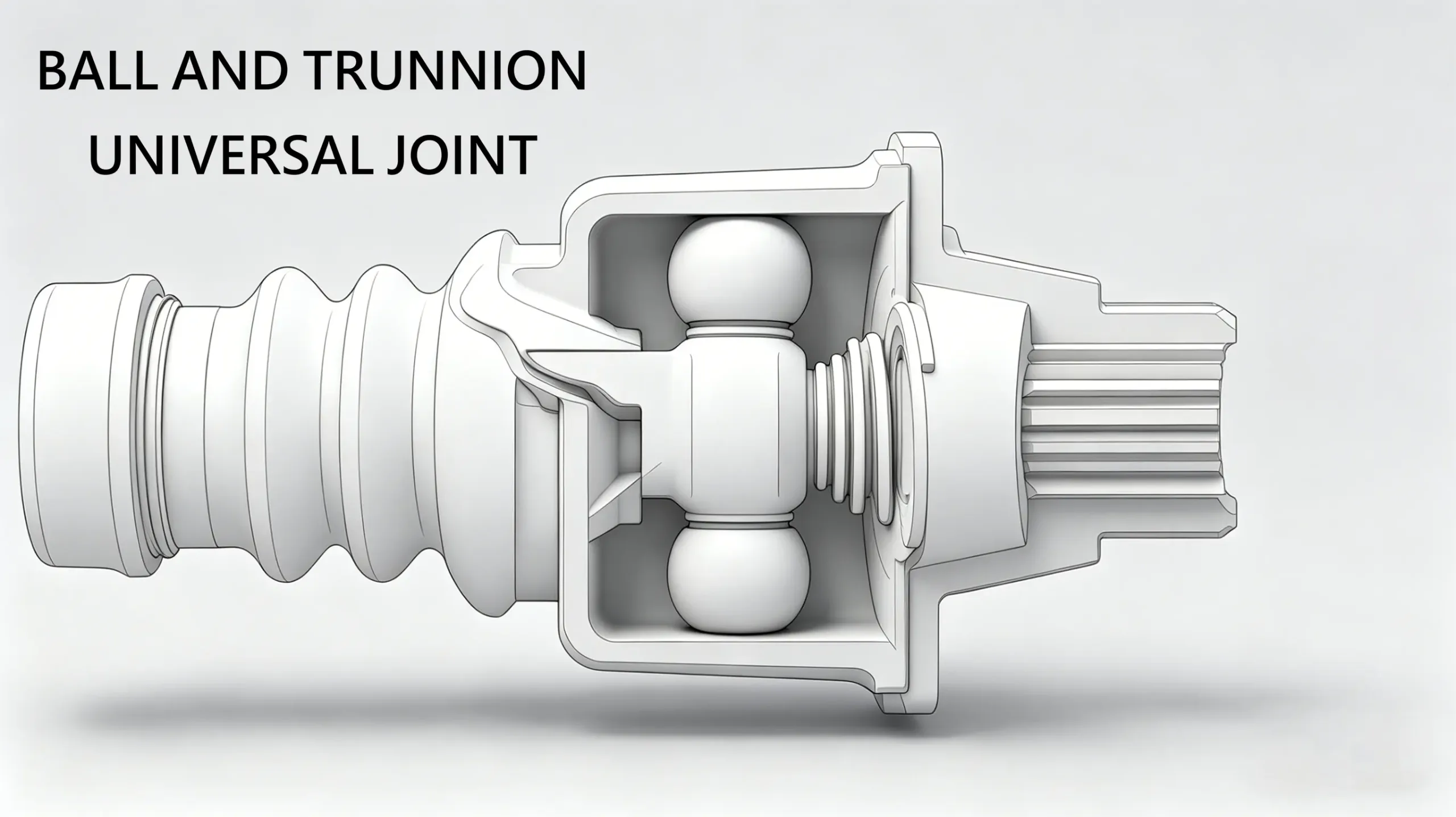
The ball and trunnion U-joint is an early design that combines angular articulation with limited axial movement via a sliding ball-and-groove mechanism. It uses a central trunnion with balls that slide along grooves in a housing, allowing angle changes and slight length variations. This joint was a predecessor to modern CV joints and tripod joints.
Pros
- Allows both angular movement and limited axial compensation
- Integrated design reduces need for separate slip components
- Suitable for early driveline architectures
Cons
- Lower torque capacity compared to modern CV and U-joints
- Higher friction and wear under load
- Largely replaced in modern vehicle designs
Common applications: Front driveshafts on classic off-road vehicles such as the Kaiser Jeep M715 (1967-1969), front driveshafts on early Jeep Wagoneer (1963-1973, SJ chassis), and driveshafts on British luxury cars like the Rolls-Royce Silver Shadow.
5. Block and Pin Universal Joint
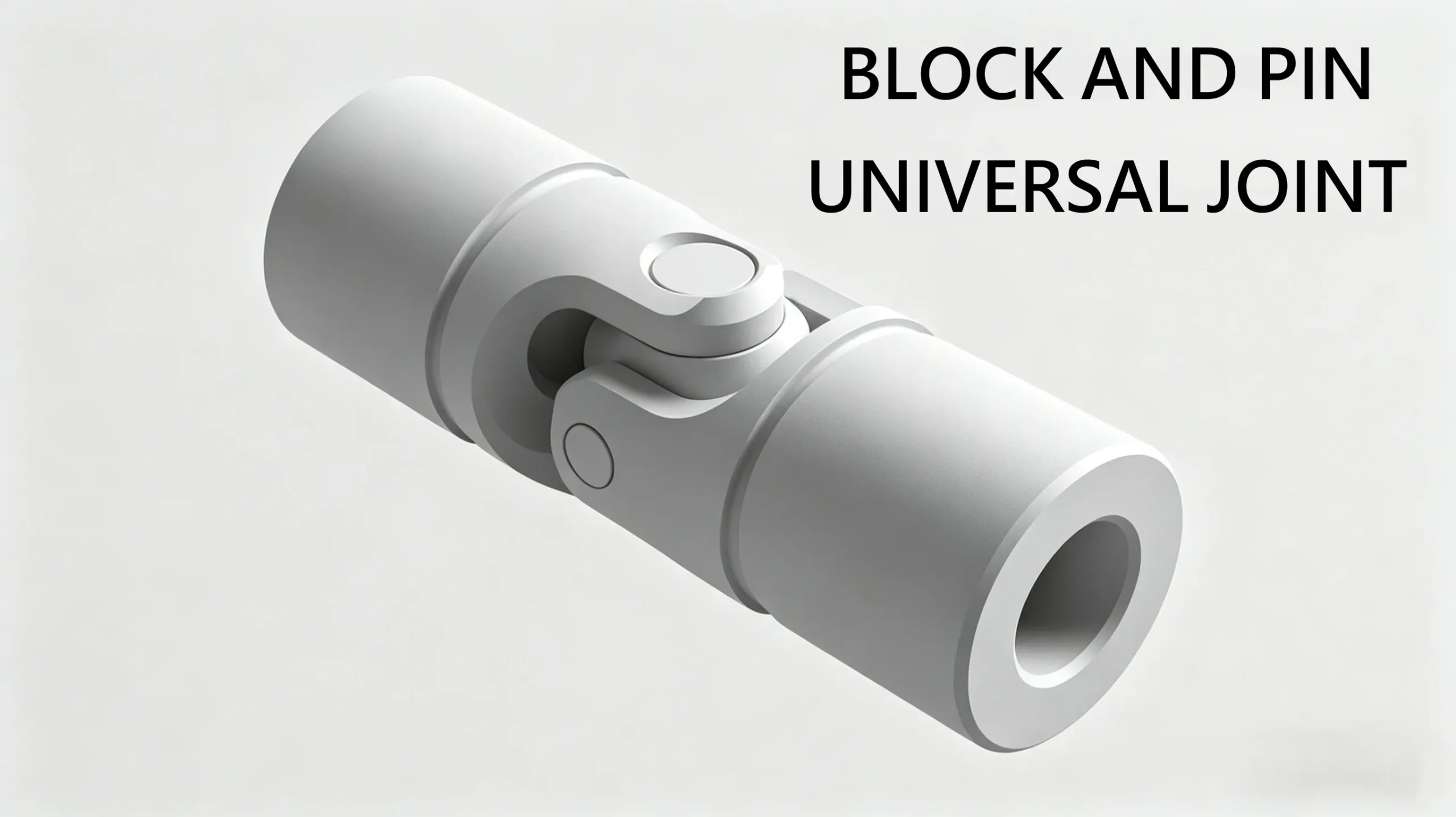
The block and pin universal joint is a simple low-speed coupling that transmits torque through a block-and-pin connection. A cross-pin fits through a central block and engages with slots in the yokes. As the input shaft rotates, the pin pushes against the block, transferring rotation to the output shaft through sliding friction rather than rolling elements.
Pros
- Very simple and low-cost structure
- Easy to manufacture and maintain
- Suitable for low-speed applications
Cons
- Limited torque and angular capacity
- Higher friction and lower efficiency
- Obsolete in most modern driveline systems
Common applications: PTO shafts on John Deere LA series lawn tractors, PTO driveshafts on Ford 8N tractors (1947-1952), small lawn mowers, walking tractors, and low-speed driveshafts on older industrial mixing equipment.
Universal Joint Types Comparison
Now that we have covered the basic characteristics and applications of each U-joint type, let's put them head-to-head. The table below provides a direct comparison of key parameters across all 5 universal joints, offering a quick and clear overview of their differences.
| Type | Angle Capacity | Torque Capacity | Vibration Performance | Maintenance | Typical Applications |
|---|---|---|---|---|---|
Single (Cross-Type) | Medium | Medium | Low (non-CV behavior) | Moderate | Passenger cars, light trucks |
Double Cardan | High | High | High (improved smoothness) | Moderate | Off-road vehicles, lifted trucks |
CV Joint | High | Medium | Very High (constant velocity) | Low (sealed) | FWD systems, independent suspension |
Ball & Trunnion | Medium | Medium | Low | Low | Classic vehicles |
Block & Pin | Low | Very High | Medium | High | Industrial machinery |
How to Choose the Right Universal Joint
With five types of universal joints covered, each with its own design, angle capacity, torque tolerance, and maintenance needs, finding the right match can be challenging. To simplify the decision, here are 5 key factors to guide your choice:
- Load Capacity: Calculate both static and dynamic loads. Heavy-duty applications need robust single cross-type U-joints, while standard CV joints or double Cardan joints suit lighter vehicles.
- Speed Requirements: High-speed applications require CV joints or double Cardan joints to minimize vibration. Single cross-type U-joints are better for lower-speed, high-torque scenarios.
- Environmental Conditions: Consider temperature, moisture, and chemical exposure. For harsh environments, select corrosion-resistant materials or sealed designs. Sealed CV joints offer maintenance-free convenience, while greaseable cross-type joints allow field servicing.
- Installation Space and Maintenance: Ball-and-trunnion and block-and-pin joints are low-cost options for legacy or low-speed equipment with simple maintenance needs.
- Cost vs. Quality: Balance upfront cost against long-term reliability. Higher-quality joints reduce premature failure and downtime, offering better overall value.
Once you have determined the right type, choosing a reliable U-joint supplier is equally important. Zeke Parts offers precision-engineered, high-quality universal joints and double Cardan joints with competitive value. Our offering includes an extensive specification database covering driveline models from major brands, along with full technical support from specification matching to application advice. Simply reach out to us, and we will respond within 24 hours with friendly, practical guidance.
Contact UsFrequently Asked Questions (FAQ)
What is a universal joint used for?
A universal joint is used to connect two shafts that are not aligned in a straight line, allowing angular movement while transmitting rotary power. In automotive applications, for example, it transfers power from the transmission to the rear axle on rear-wheel drive vehicles or from the transmission to the wheels on front-wheel drive vehicles.
Where is the U-joint located in a car?
The location depends on the drive configuration. On rear-wheel drive and four-wheel drive vehicles, U-joints are found at both ends of the longitudinal driveshaft running under the chassis, connecting the transmission to the rear differential. On front-wheel drive vehicles, U-joints (typically CV joints) are located on the half-shafts on both sides, connecting the transmission to the drive wheels.
Can different universal joint types be mixed on a driveshaft?
Yes, but only with a conversion joint that has different cap sizes or clip styles on each end. Mixing without the correct joint causes vibration and premature wear. Always verify cap diameter and clip type before mixing.
Which U-joint type is best for heavy-duty applications?
Heavy-duty applications typically use single cross-type U-joints with alloy steel and needle bearings for maximum torque capacity. For high-angle or constant-velocity needs, CV joints or double Cardan joints are better options.
Conclusion
Selecting the right automotive U-joint comes down to matching its characteristics to your operating conditions, including angle, torque, speed, and environment. Each design offers a distinct balance of performance, durability, and cost. Understanding these trade-offs is the key to avoiding premature wear and driveline issues.
But knowing the right type is only half the equation. Quality manufacturing and engineering support ensure long-term reliability, and that is exactly what Zeke Parts delivers. Zeke Parts U-joints are built with high-strength alloy steel to handle extreme speeds, heavy torque, and tough conditions. We offer worldwide shipping, sample support, and welcome factory visits. Contact us for more information or assistance with your specific application.