
Zeke Parts
Our editorial experts provide authoritative, research-driven insights into precision driveline engineering. With decades of combined industry experience, we deliver technical accuracy and professional guidance to ensure excellence in mechanical power transmission.


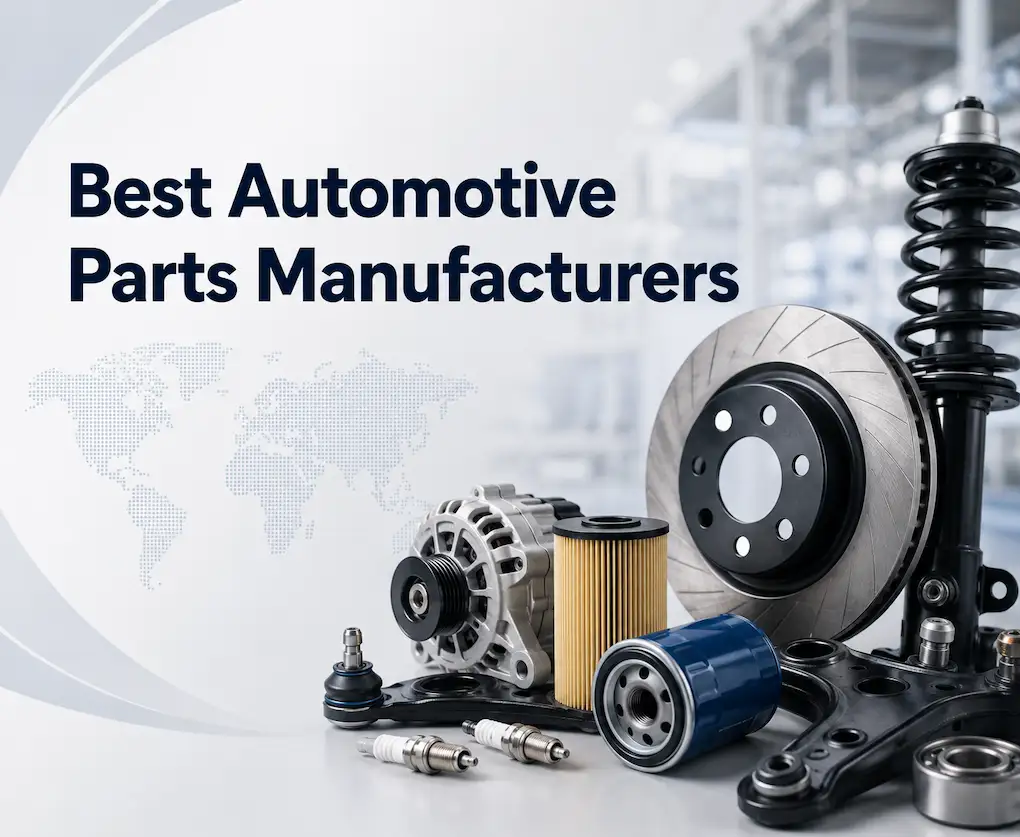
Top 10 Best Automotive Parts Manufacturers for Quality Car Parts
Sourcing dependable components is critical for repair shops, distributors, and fleet buyers alike. The global supply chain spans OEM-grade manufacturers and aftermarket specialists, and their quality, technical expertise, and supply stability vary widely. Choosing the right automotive parts manufacturer is a decision that directly affects vehicle safety, uptime, and total cost of ownership. This guide profiles 10 leading automotive parts manufacturers across drivetrain, braking, electronics, thermal management, and other core categories. Whether you’re a parts distributor or a fleet procurement team, you can quickly match each manufacturer’s strengths to your sourcing needs.
2026-07-24
Read more>>
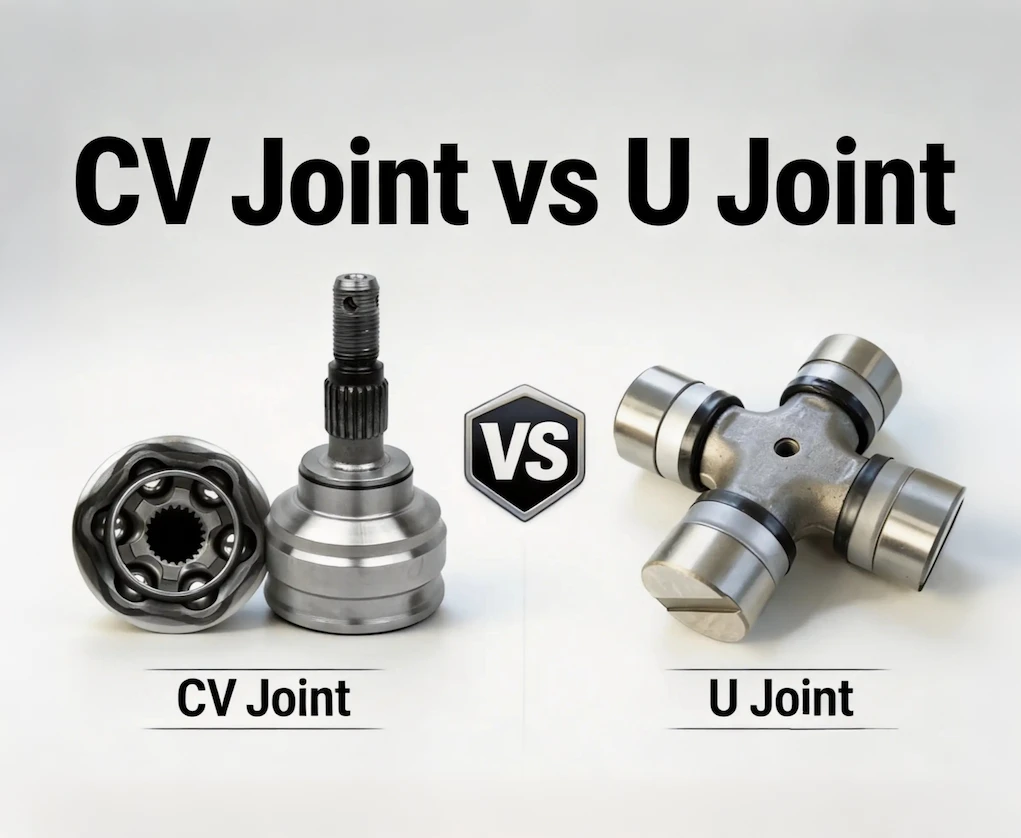
CV Joint vs U Joint: What’s the Difference and How to Choose
CV joints and U-joints are both critical components of a vehicle’s drivetrain, yet they are often confused despite their distinct roles. They both facilitate the transfer of power between shafts at varying angles but differ significantly in design, angular capacity, and maintenance needs. Installing the wrong component or overlooking early failure symptoms may cause mild vibration issues or even a complete drivetrain breakdown. This guide breaks down the essential differences to help you make the right choice for your vehicle and driving habits.
2026-07-23
Read more>>
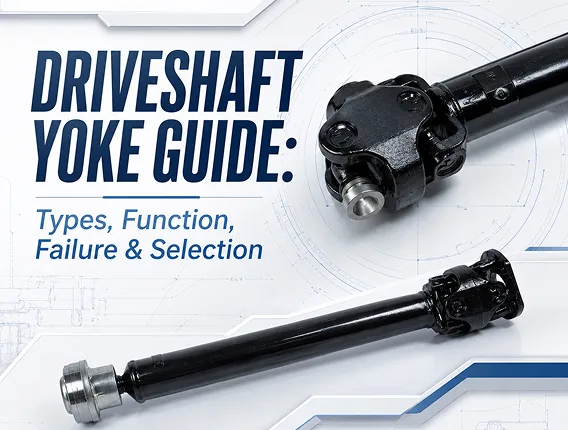
Driveshaft Yoke Guide: Types, Function, Failure & Selection
The driveshaft yoke is an easily overlooked but critically important component. Located at the ends of the driveshaft, it holds the universal joint, transmits torque, and compensates for angle changes. Many people instinctively replace the U-joint or the entire driveshaft when they experience driveline issues. After going in circles, they find the problem remains, and the root cause is actually yoke wear or distortion. There are several types of yokes, including slip, tube, flange, and pinion, each with a different structure. Buy the wrong one and it will not fit, or worse, it will not last. This guide covers yoke identification, function, failure symptoms, and selection so you can spot damage and choose the right replacement.
2026-07-23
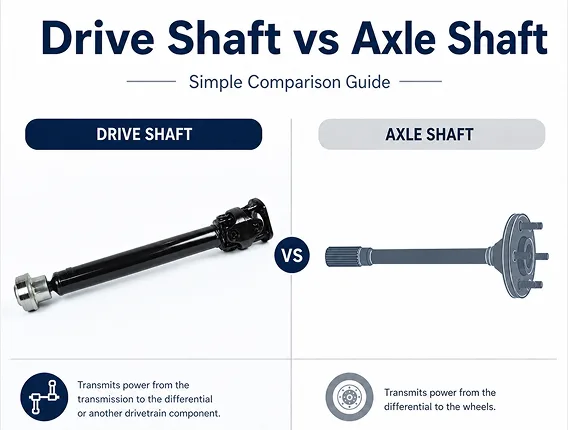
Read more>>Drive Shaft vs Axle Shaft: What’s the Real Difference?
A vehicle cannot move unless engine power is transferred to the wheels through the drivetrain system. This process involves several rotating components working together to deliver torque smoothly. Among these drivetrain components, the drive shaft and axle shaft are commonly misunderstood because both are involved in power delivery. However, they serve different functions and operate in different areas of the vehicle. Keep reading to see how they differ and why that difference matters when diagnosing vibration and drivetrain problems.
2026-07-23
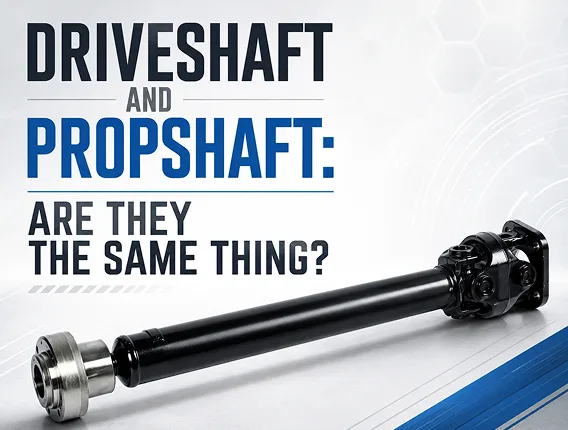
Read more>>Driveshaft and Propshaft: Are They the Same Thing?
Driveshaft and propshaft are often used interchangeably, especially in everyday conversation and in North America, where both terms typically describe the same long shaft running from the transmission to the rear differential. In British usage, however, the two terms mark a real distinction. This guide breaks down that distinction from a technical standpoint, covering the differences in design, function, and application so you know exactly how the terms are used in precise engineering contexts.
2026-07-17
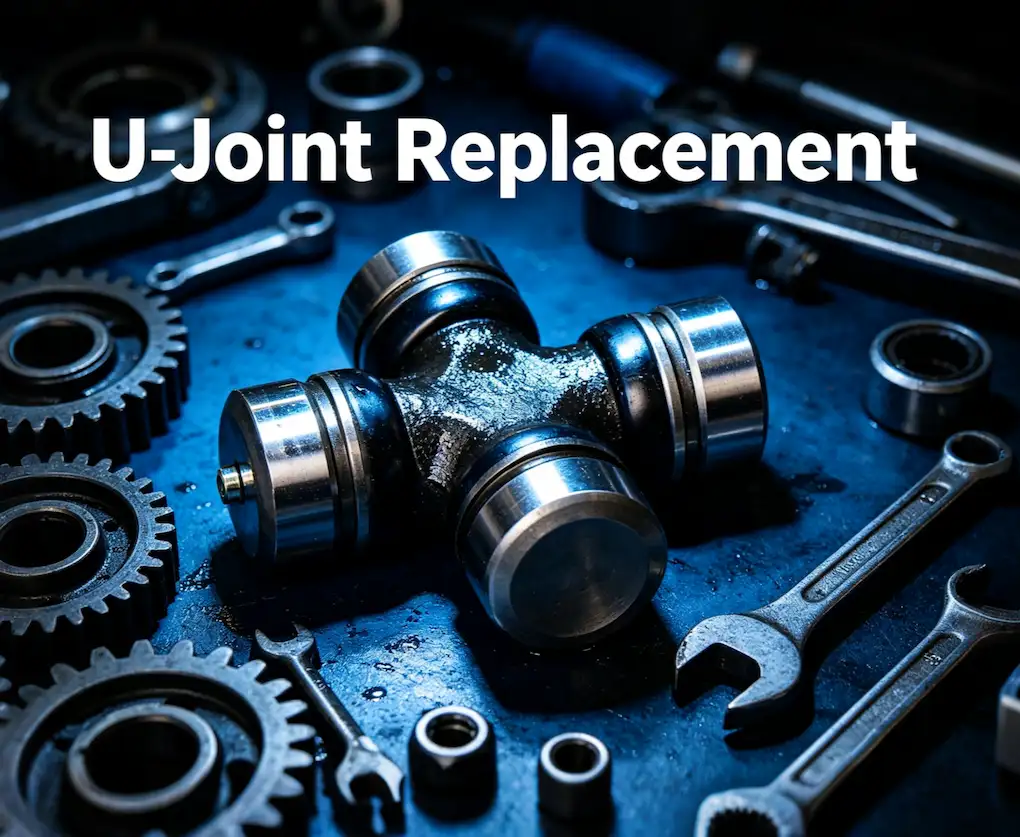
Read more>>U-Joint Replacement: Cost Breakdown & DIY Guide
Shifting clunks and highway vibration point to a faulty U-joint, yet many drivers dismiss these warning signs. Car owners often delay repairs due to expensive shop rates and DIY uncertainty. Ignoring a worn U-joint can lead to in-motion driveshaft detachment, damaging critical drivetrain components, and ballooning a minor part replacement into a costly repair. A professional U-joint replacement usually costs between $200 and $500 at a repair shop, while DIY repair is far more budget-friendly. Generally, your total DIY cost stays merely $50 to $250. Fortunately, u-joint replacement is one of the few drivetrain repairs ideal for DIYers, and this guide will help you diagnose symptoms, select the right parts, complete the replacement, and calculate exactly how much you can save by repairing on your own.
2026-07-17
Read more>>
7 Best Aftermarket Car Parts Manufacturers You Can Trust
Are you often torn between high dealership prices and doubts about the quality at local repair shops? Actually, the legitimate aftermarket is home to top-tier brands that either supply original parts to automakers like Toyota, BMW, and Ford, or have spent decades perfecting specific areas like driveline or thermal management. Choosing a quality aftermarket brand means you can get OE-level or even better performance at a fraction of dealership cost. Moreover, reputable aftermarket brands offer more flexible purchasing channels, wider vehicle coverage, and transparent warranty policies, giving you real choice when it comes to repairs. This article introduces the 7 best aftermarket car parts manufacturers with proven expertise. Let’s take a look at these five trustworthy brands.
2026-07-13
Read more>>
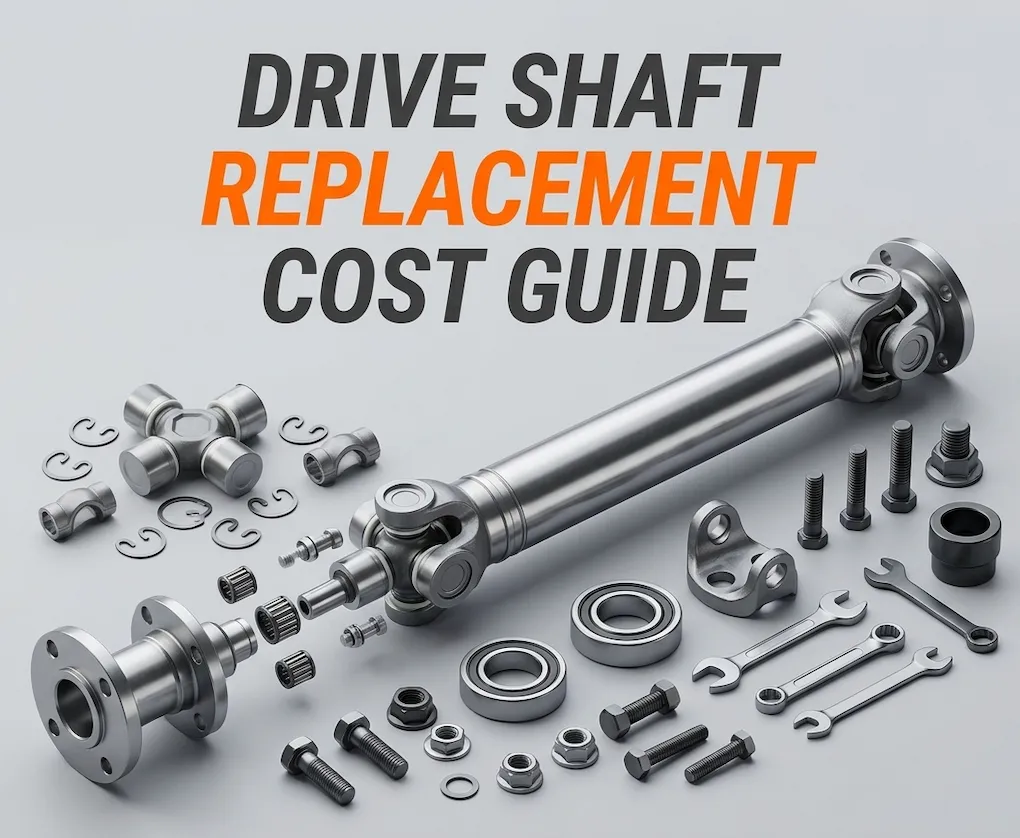
Drive Shaft Replacement Cost: The Complete Guide
Drive shaft replacement costs range widely, from around $150 for a minor repair to more than $1,500 for a full replacement on certain vehicles. Vehicle type, the severity of the damage, and your choice between OEM and aftermarket parts all play a role in determining the final price. In this guide, we will break down labor and parts costs, the key factors driving that price range, when and where to get it replaced, and practical ways to save.
2026-07-10
Read more>>

Request a Factory Quote
Looking for custom specs or packaging? Send us your target quantity for a bespoke solution.
- Since 1990
- IATF 16949:2016
- 12M+ Units / Year