
Drive shaft replacement costs range widely, from around $150 for a minor repair to more than $1,500 for a full replacement on certain vehicles. Vehicle type, the severity of the damage, and your choice between OEM and aftermarket parts all play a role in determining the final price.
In this guide, we will break down labor and parts costs, the key factors driving that price range, when and where to get it replaced, and practical ways to save.
Table of Contents
How Much Does It Cost to Replace a Drive Shaft
The drive shaft plays a critical role in transferring power from the transmission or transfer case to the wheels. When it becomes damaged or worn, replacement may be necessary to restore proper drivetrain performance. On average, drive shaft replacement costs between $400 and $1,500, including parts and labor. Sedans are often on the lower end, while trucks, SUVs, and luxury vehicles may cost more due to larger or more complex systems.
The total replacement price varies depending on how much you spend on parts, labor, and the type of vehicle. The following sections provide a detailed cost breakdown.
📌 Please note: The prices listed in this guide are estimates based on industry averages and may vary depending on your location, vehicle make and model, and the repair shop you choose. Always request a quote from a trusted mechanic before proceeding with any repair.
Labor and Parts Cost Breakdown
Labor and parts each account for a different share of the total bill, and the split often depends on which component actually needs replacing. The table below breaks down typical costs for the most common drive shaft parts.
| Part | Average Parts Cost | Labor | Total Estimate | Notes / Challenges |
|---|---|---|---|---|
U-joint | Standard: $20–$80 OE/Heavy-duty: $60–$150 | $100–$350 | $150–$500 | Sizing must match your specific shaft; wrong fitment is a common issue |
Center bearing | $50–$200 | $150–$400 | $250–$600 | Applies mainly to two-piece shafts; often requires realignment after install |
Slip yoke | $50–$150 | $100–$200 | $200–$350 | Less common sizes may not be in stock and could require special ordering |
Full rebuild kit | $200–$600 | $300–$500 | $500–$1,100 | Recommended when several components are worn at once, driving up labor time |
This table covers the most commonly replaced components. The shaft tube, end yokes, and balance weights are usually addressed together with other repairs, rather than priced as separate line items. With this baseline established, let's look at how vehicle type shifts these numbers.
Drive Shaft Replacement Costs by Vehicle Type
Vehicle type is one of the biggest cost drivers for a full drive shaft replacement, since size, drivetrain layout, and part availability all affect the cost to fix a drive shaft. The table below breaks down typical total costs across common vehicle categories.
| Vehicle Type | Typical Vehicle Examples | Estimated Cost | Main Cost Factors |
|---|---|---|---|
Passenger Cars | Toyota Camry, Honda Accord, Ford Mustang | $400–$900 | Smaller, simpler shafts with lower torque needs |
SUVs and Crossovers | Toyota RAV4, Jeep Grand Cherokee, Ford Explorer | $600–$1,200 | Larger shafts and AWD/4WD components |
Pickup Trucks | Ford F-150, Chevrolet Silverado, Toyota Tacoma | $700–$1,500 | Heavy-duty shafts built for higher torque loads |
Heavy-Duty and Commercial Vehicles | Ford Transit, Ram ProMaster, Freightliner Trucks | $1,000–$2,000+ | Larger, custom shafts for demanding use |
Luxury Vehicles | Mercedes-Benz C-Class, BMW 5 Series, Audi A6 | $1,000–$2,500+ | Premium OEM parts and specialized designs |
Compared to the component-level costs above, pricing by vehicle type reflects the full-replacement job rather than a single part, which is why the totals are noticeably higher across all categories.
Factors Affecting the Cost of Drive Shaft Replacement
Apart from basic parts pricing and the labor cost to replace the drive shaft, several additional factors determine the final expense of your drive shaft replacement. Here's what can raise or lower the cost to replace a drive shaft:
- Vehicle make and size: Large trucks, SUVs, and luxury cars often need longer, heavier-duty shafts or specialized parts, increasing both front drive shaft replacement cost and rear drive shaft replacement cost.
- Type of drive shaft: One-piece shafts are simpler and cheaper, while two-piece shafts (with a center bearing) cost more due to additional components.
- OEM vs. aftermarket parts: OEM parts guarantee a perfect fit and factory specifications, but they cost the most. High-quality aftermarket drive shaft brands like Zeke Parts strictly follow OEM technical parameters to achieve great physical compatibility and performance parity, offering the same reliability at significantly lower prices. Choosing the best drive shaft manufacturer for your needs is also the key to restoring your vehicle’s performance.
- Repair shop location and type: Dealerships charge 30%–50% more than independent mechanics. Urban shops also tend to have higher hourly rates than rural ones.
- Additional components that may need replacement: The new drive shaft comes with new U-joints, center bearings, and CV joints already included. But if nearby parts not included in the assembly, like the differential CV joint or transmission yoke, are also worn, replacing them will add several hundred dollars in parts and labor.
When to Replace a Drive Shaft
When a drive shaft is damaged, the repair approach depends on the severity and location of the problem. Minor wear may only require replacing individual components, while severe damage to the shaft assembly may require a complete replacement. The following bad drive shaft symptoms can help you identify the extent of the problem and determine the right repair solution:
- Intense Vibrations: Mild vibrations that only appear at certain speeds may be caused by shaft imbalance or minor component wear and may only require balancing or replacing worn parts. However, strong vibrations that increase during acceleration usually indicate a bent or damaged drive shaft, which may require complete replacement.
- Abnormal Noises: Occasional clunking during gear shifts may be caused by worn U-joints or loose connections and can often be fixed by replacing individual components. Continuous knocking, grinding, or loud noises usually indicate advanced wear or damaged shaft parts, requiring further inspection and possible drive shaft replacement.
- Damaged Universal Joints (U-Joints): Slight looseness or early wear in U-joints can usually be repaired by replacing the joints. If the U-joints have excessive play, cracks, or have damaged the shaft connection points, replacing the complete drive shaft assembly may be necessary.
- Steering or Handling Problems: Minor drivetrain vibration or binding may be related to worn components and can often be resolved with targeted repairs. Severe handling issues, drivetrain resistance, or loss of power transfer indicate more extensive damage and may require drive shaft replacement.
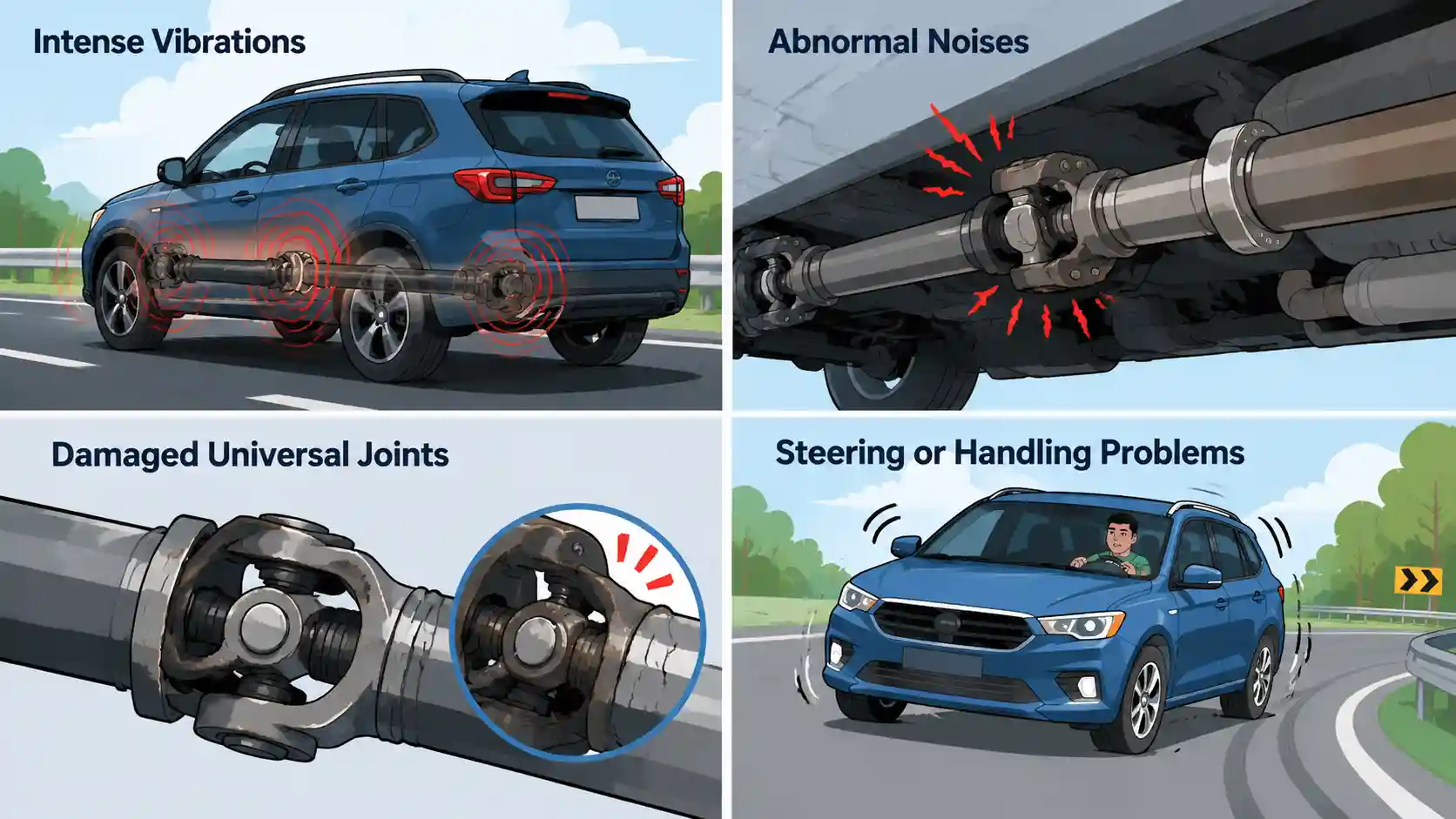
Do not wait until a drive shaft completely fails. A drive shaft snapped while driving can result in a sudden loss of power transfer, drivetrain damage, or an unsafe driving situation. Addressing early warning signs can help determine whether a component repair or complete replacement is needed.
Where to Replace a Drive Shaft
When replacing a drive shaft, the most suitable replacement method depends on your budget, vehicle type, and installation needs. The table below compares common replacement methods based on cost, convenience, and suitability, helping you choose the right approach.
| Option | Advantages | Disadvantages | Best For |
|---|---|---|---|
Dealership | OEM parts, factory-trained technicians | Highest cost | Vehicles under warranty, luxury brands |
Independent repair shop | Lower labor rates, often accept customer-supplied parts | Quality varies by shop | Most daily drivers |
Driveline specialist | Specialized tools and expertise | Less common, may cost more than general shops | Modified vehicles, persistent vibration issues |
Buy online + install locally | Save 30–50% vs. dealership | Requires coordinating part purchase and shop | Cost-conscious owners willing to do research |
DIY | Save all labor costs (2–5 hours) | Requires tools, experience, and safety awareness | Experienced home mechanics with proper equipment |
Each replacement method has its own advantages and limitations. Local repair shops and online purchases with professional installation are suitable for most standard vehicles, while custom solutions are better for specialized applications. Custom manufacturers like Zeke Parts provide drive shafts and drive shaft components, along with custom manufacturing services featuring precise dimensions and application-specific designs for modified vehicles, classic cars, and heavy-duty equipment.
Contact UsMoney-Saving Tips for Drive Shaft Replacement
Making the right choices during the repair process can help you avoid unnecessary expenses. Consider these practical tips to keep replacement costs under control:
- Compare prices from at least 3 shops, including online quotes.
- Choose aftermarket or remanufactured parts, which are usually cheaper than OEM parts.
- Use an independent mechanic instead of a dealership to reduce labor costs.
- If only the U-joint or bearing is damaged, replace that component instead of the entire shaft.
- Remove the drive shaft yourself and have a professional handle repairs such as balancing or U-joint replacement.
- Replace related worn parts at the same time to avoid additional labor costs later.
- Check the warranty coverage, as some aftermarket brands offer longer warranties than OEM parts.
Finding a balance between cost and reliability is the biggest challenge in drivetrain repair, which is why Zeke Parts focuses on supplying high-volume, precision-engineered components. We provide OEM-quality drive shaft assemblies and can even match specific samples for a precise fit. If you need a quote for your specific model, just reach out to us today; our team will get back to you within 24 hours to help you find the best wholesale pricing for your business.
FAQs
Can I drive with a bad drive shaft?
Driving with a damaged drive shaft is not recommended, especially if you notice severe vibrations or unusual noises. A failed drive shaft can damage drivetrain components or leave the vehicle unable to move. Have it inspected as soon as possible.
Drive shaft vs. CV axle (axle shaft): what's the difference?
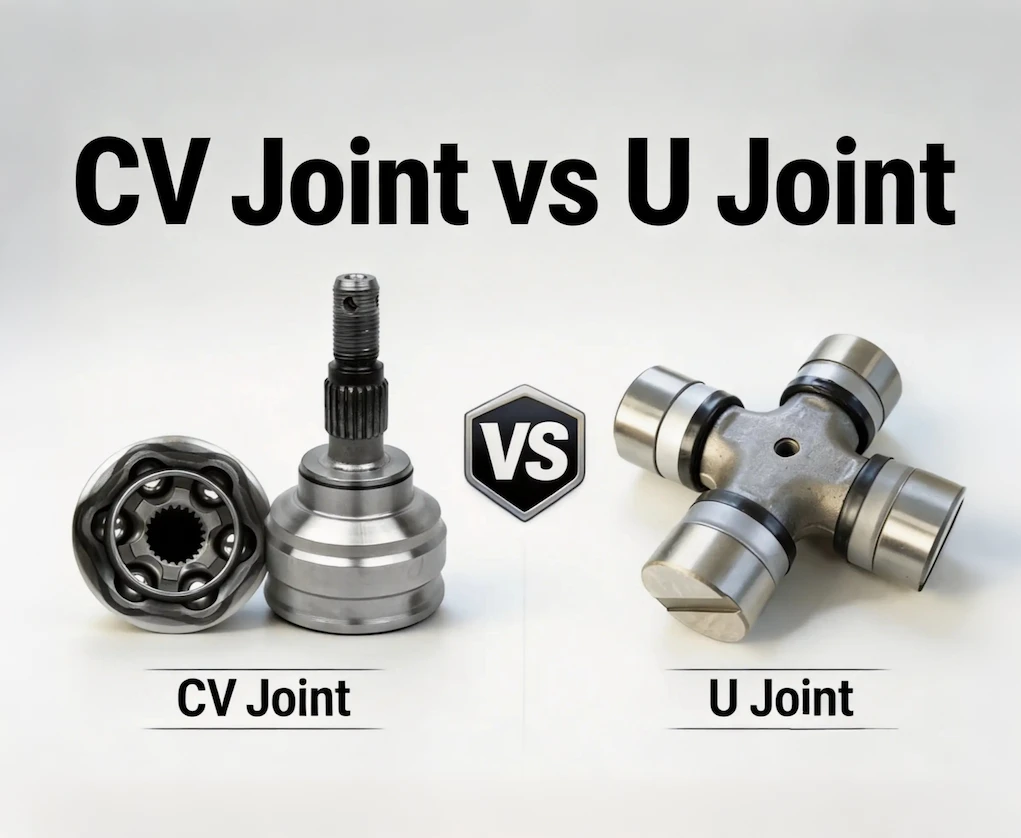
A drive shaft is typically a long, tubular component used in RWD, 4WD, and AWD vehicles to transfer power from the transmission to the differential. In contrast, a CV axle is a shorter component found in FWD and some AWD/4WD vehicles that connects the transmission directly to the wheels using constant-velocity joints to accommodate steering and suspension movement.
What is the lifespan of a drive shaft?
There's no fixed lifespan, but a drive shaft typically holds up for around 75,000 miles. Towing, off-road use, rust, ride-height modifications, and damaged U-joint seals can shorten that. Have it inspected during tire rotations or oil changes, and address any vibrations or noises right away.
Conclusion
Drive shaft replacement is a necessary investment when failure symptoms appear. The cost typically ranges from $400 to $1,500, depending on the vehicle type, parts, labor rates, and repair shop. By understanding these factors and choosing reliable replacement components from trusted suppliers like Zeke Parts, you can maintain drivetrain performance while controlling repair costs.