
Maintaining the mechanical integrity of your vehicle is crucial for both safety and performance. Among the various components that keep your car moving, the drive shaft plays a pivotal role. However, like any mechanical part, it is subject to wear and tear over time. Whether you are noticing strange vibrations or hearing odd noises from underneath your vehicle, understanding the nuances of drive shaft replacement is essential.
This guide covers everything from recognising failure signs to analysing the cost of replacing drive shaft components and the steps involved in a DIY project.
Table of Contents
Signs of a Bad Drive Shaft
The drive shaft is a cylindrical component that transmits torque from the engine and transmission to the wheels, allowing the vehicle to move. It is the literal bridge of power in your drivetrain. When it begins to fail, the bad drive shaft symptoms are usually physical and audible.
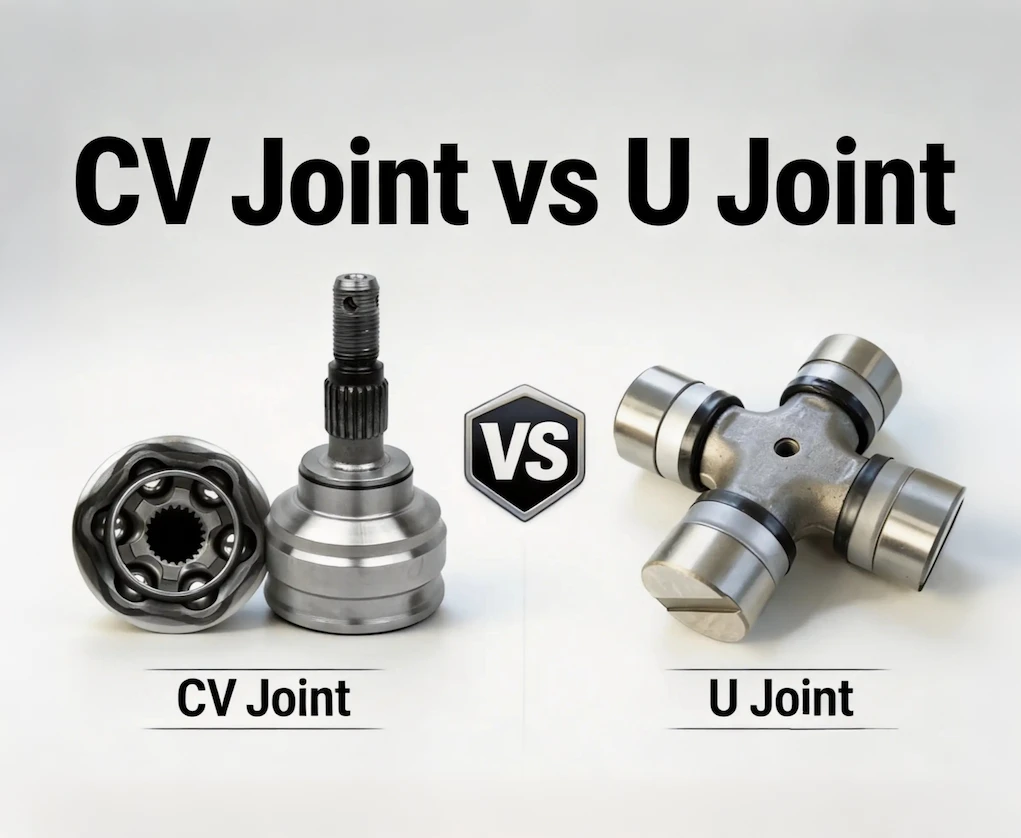
- Intense Vibrations from Under the Vehicle: One of the most common signs is a persistent shaking or shivering coming from the floorboards. This often indicates worn-out universal joints (U-joints) or a shaft that has become unbalanced.
- Abnormal Noises (Clunking, Squeaking, or Scraping): If you hear a loud “clunk” when shifting gears or a rhythmic squeaking that increases with speed, your drive shaft or its bushings are likely failing.
- Difficulty Turning: Since the drive shaft influences how wheels rotate, a failing shaft, especially a drive shaft (cv axle) in front-wheel-drive vehicles, can cause significant resistance during tight turns.
- Visible Shuddering During Acceleration: Feeling a jerk or shudder as you take off from a stop is a classic symptom of a loose U-joint or a failing drive shaft (axle shaft).
- Structural Damage to the Drive Shaft: Any visible bends, cracks, dents, or twisted sections on the drive shaft mean the component has been overstressed. These defects cannot be repaired and require an immediate drive shaft replacement to prevent sudden failure while driving.
When Should You Replace a Drive Shaft?
Not every drive shaft issue requires immediate replacement. Common causes of drive shaft problems include worn U-joints, damaged center support bearings, bent shafts, and excessive driveline stress. The key is determining whether the problem can be solved by replacing individual components or whether the drive shaft itself has suffered structural damage.
The following stages show how drive shaft problems typically progress and when a complete replacement becomes necessary.
| Severity Level | Symptoms | Meaning | Action |
|---|---|---|---|
🟡 Early Warning | Slight vibration, minor noise | Initial wear (U-joint aging) | Monitor / minor repair |
🟠 Moderate Damage | Clunking noise, noticeable vibration, poor smoothness | Functional degradation | Repair or component replacement |
🔴 Severe Failure | Heavy vibration, metal noise, shaft damage or crack | Structural failure | Full replacement required |
Taking action when drive shaft problems appear can help maintain stable vehicle performance and reduce the risk of unexpected issues on the road. Proper inspection and timely repairs are important for keeping the driveline safe and reliable.
Drive Shaft Replacement Cost Breakdown
Replacing a drive shaft is a significant repair expense, but the final cost depends on the vehicle type, replacement parts, and labor rates. In most cases, a complete drive shaft replacement costs around $400 to $1,500, including both parts and labor. However, heavy-duty trucks, luxury vehicles, and complex driveline systems can push the total cost to $1,200–$2,000 or more.
DIY vs Professional Replacement Cost
Replacing a drive shaft yourself can reduce labor expenses, but it requires proper tools, mechanical experience, and a safe working environment. Professional replacement costs usually include both the drive shaft assembly and installation labor.
- DIY replacement cost: About $150–$500 for the drive shaft part alone, plus any additional tools (torque wrench, jack stands, U-joint press, etc.) needed. Sourcing a quality aftermarket part in the $250–$800 range is common for most passenger vehicles.
- Professional replacement cost: Around $400–$1,500 for most passenger vehicles, including parts and labor. Costs trend toward the higher end, around $1,200–$2,000+, for AWD vehicles, trucks, and luxury models with more complex driveline systems.
Factors That Affect Drive Shaft Replacement Cost
Understanding what drives the final price can help you budget more accurately and avoid unexpected expenses. From your vehicle’s make and model to the type of parts you choose, several key variables come into play when estimating this repair.
- Vehicle Model and Size: Larger vehicles generally require stronger and more expensive drive shafts than smaller passenger cars.
- Type of Drive Shaft: A single-piece rear drive shaft is generally cheaper and easier to replace than a complex two-piece shaft with a center support bearing.
- OEM vs. Aftermarket Parts: Original Equipment Manufacturer (OEM) parts offer guaranteed fitment but are the most expensive. High-quality aftermarket brands, such as Zeke Parts, provide an excellent drive shaft alternative by offering OEM-level durability and precision at a more accessible price point.
- Associated Component Replacement: The drive shaft is often connected with other wear-prone components. If parts such as the U-joint, center support bearing, or yoke are damaged, replacing them at the same time can increase both parts costs and labor time.
- Location and Shop Type: Dealerships charge the highest labor rates, whereas independent shops are more affordable. Additionally, labor costs in major urban centers are typically higher than in rural areas.
With so many variables affecting the final price, choosing the right drive shaft manufacturer makes a real difference. Zeke Parts manufactures drive shafts and other driveline components, including yokes, spline shafts, and flange yokes, with OEM-level specifications and competitive factory-direct pricing.
Feel free to request samples or come visit our facility to see how we precision-manufacture drive shafts. Just send Zeke Parts your vehicle specs, and you will receive a response within 24 hours.
Contact UsHow to Replace a Drive Shaft
If you are planning to replace a drive shaft yourself, getting the procedure right is essential. Keep in mind that every vehicle is a bit different. What works for a truck might not apply to a sedan. Make sure to double-check your owner's manual for the specific safety steps and bolt specs for your exact model.
Tools Required for Replacing a Drive Shaft
Before you begin, gather the following:
- Jack and a jack stand (or a lift)
- Socket wrench set (metric and standard)
- Torque wrench
- Screwdrivers and pliers
- Drain pan (some transmissions may leak fluid when the shaft is removed)
- Replacement drive shaft and new hardware (bolts/straps)
How to Remove a Drive Shaft
Removing a drive shaft requires careful preparation and attention to detail. Follow these steps to remove the old unit safely.
STEP 1: Park on a level surface, engage the parking brake, and chock the wheels. Lift the vehicle and secure it on jack stands.
STEP 2: Use a paint pen to mark the relationship between the drive shaft and the transmission or differential flanges. This ensures proper balance if reinstalling the same shaft.
STEP 3: Remove the bolts or straps securing the drive shaft to the differential.
STEP 4: Carefully slide the yoke out of the transmission or transfer case. Be prepared for a small amount of fluid to escape.
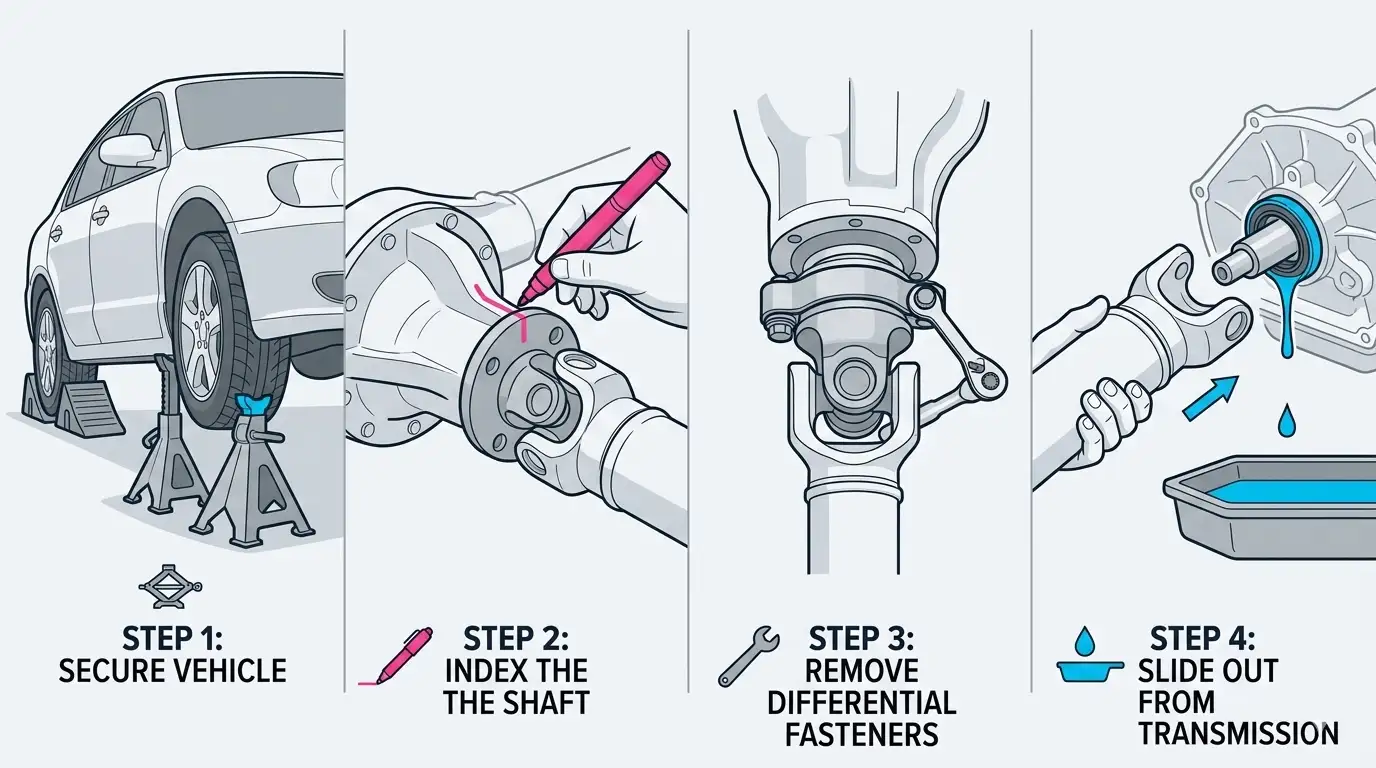
Note: This illustration demonstrates the removal of a longitudinal drive shaft typically found in RWD or 4WD vehicles. Always ensure your vehicle is securely supported before beginning work.
How to Install a Drive Shaft
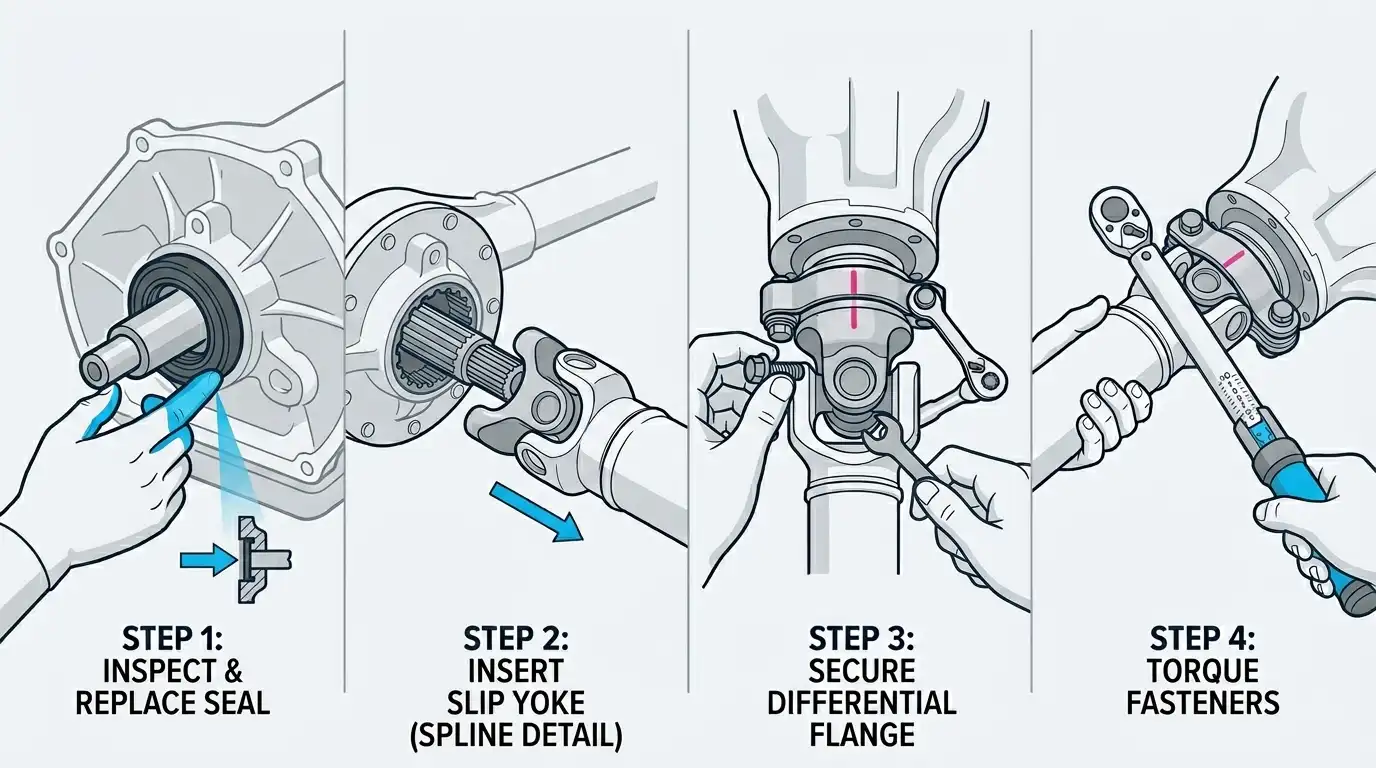
Once the old drive shaft is out, installing the new one is essentially the reverse process. Follow these steps for proper installation.
STEP 1: Check the transmission output seal for leaks and replace it if necessary.
STEP 2: Carefully slide the new drive shaft yoke into the transmission, being careful not to damage the splines or the seal.
STEP 3: Align the other end of the shaft with the differential flange. Reinstall the bolts or straps.
STEP 4: Use a torque wrench to tighten all fasteners to the manufacturer's specifications. This is critical for preventing the shaft from coming loose.
FAQs About Drive Shaft Replacement
How long does a drive shaft take to replace?
A professional technician can usually replace a drive shaft in 1 to 3 hours, depending on the vehicle type and drivetrain design. For DIY replacement, it may take 3 to 5 hours or longer, especially without a lift or prior mechanical experience.
Can I still drive with a bad drive shaft?
Not recommended. Minor wear may allow short-distance driving, but a severely damaged shaft can cause power loss, violent vibration, or damage to other driveline components. Have it inspected and repaired as soon as possible.
Can I install a new car driveshaft without special tools?
A drive shaft replacement requires basic mechanical tools and proper lifting equipment. While experienced DIY mechanics may complete the job at home, special tools such as a torque wrench and safe vehicle support equipment are often needed. For most drivers, professional installation is the safer option.
Conclusion
A drive shaft is a critical part of the drivetrain, and keeping it in good condition helps maintain reliable vehicle performance. When replacement becomes necessary, factors such as the level of damage, repair costs, and available options should all be considered. With proper inspection and the right repair solution, you can restore driveline performance and prevent unnecessary problems down the road.