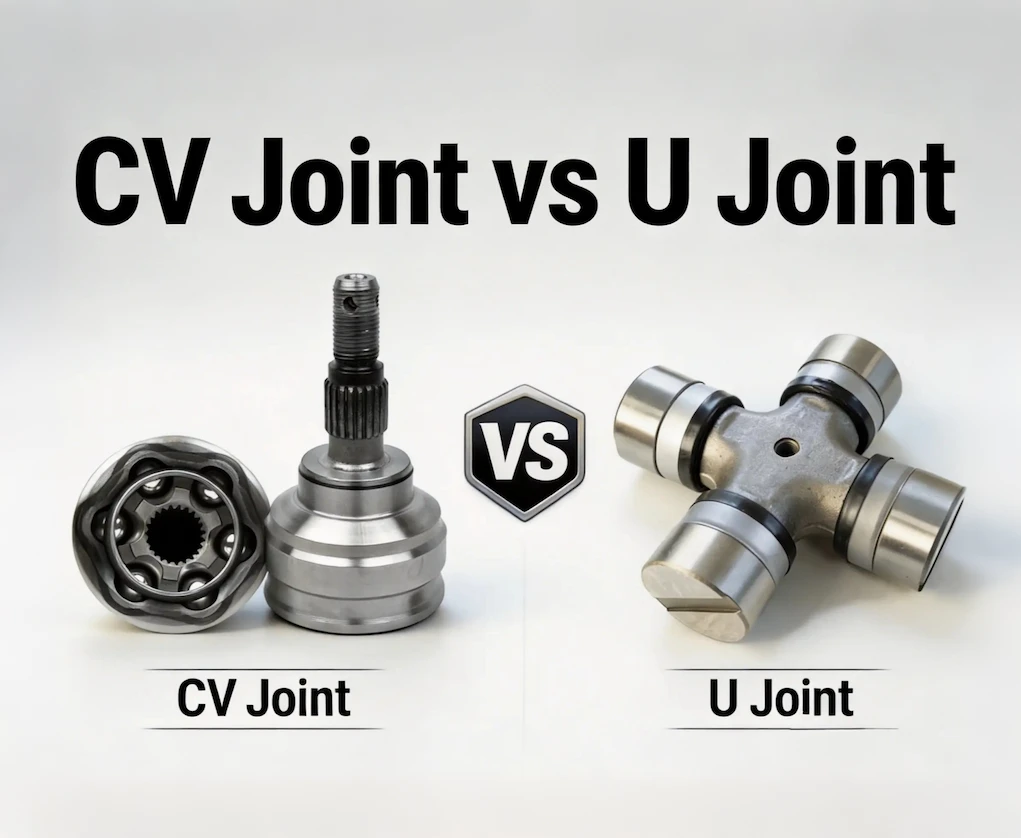

As a critical component connecting the driveshaft, the U-joint (universal joint) may be small, but it determines the smoothness of power transmission. With increasing vehicle load demands and more precise drivetrain systems, ignoring minor and unusual noises can lead to costly chassis repairs or even driving hazards.
This article explains the most common bad U-joint symptoms, causes, and their impact on vehicle performance, helping you detect issues early and avoid costly repairs.
Table of Contents
What Does a Universal Joint Do in a Driveshaft
A universal joint (U-joint) is a key component in the driveshaft system that connects the driveshaft to the transmission and the differential. In some vehicle layouts, it can also connect two driveshaft sections. It is a cross-shaped part with bearings at each end, designed to allow movement while still transmitting power.
Its main function is to keep power flowing smoothly even when the driveshaft and drivetrain components are not perfectly aligned. As the suspension moves and the vehicle travels over uneven roads, the U-joint compensates for these angle changes, allowing the driveshaft to rotate freely and efficiently without breaking the connection.
What Are the Symptoms of a Bad U-Joint
A failing U-joint typically shows several warning signs before complete failure. These symptoms can affect driving comfort, noise levels, and overall vehicle stability. Below are the most common signs of bad U-joint to help you identify the problem early.
Clunking Noises
Clunking noises are most commonly noticed during low-speed gear transitions such as shifting between Drive and Reverse or when starting from a stop. The sound becomes more evident when torque is first applied after the vehicle has been idling or operating under light load.
A faint single knock often appears at the early stage, gradually turning into more frequent and noticeable impacts as internal clearance increases. Unlike engine or transmission related knocking, U-joint clunking is directly related to driveline movement and is most apparent during changes in load direction.
Vibrations While Driving
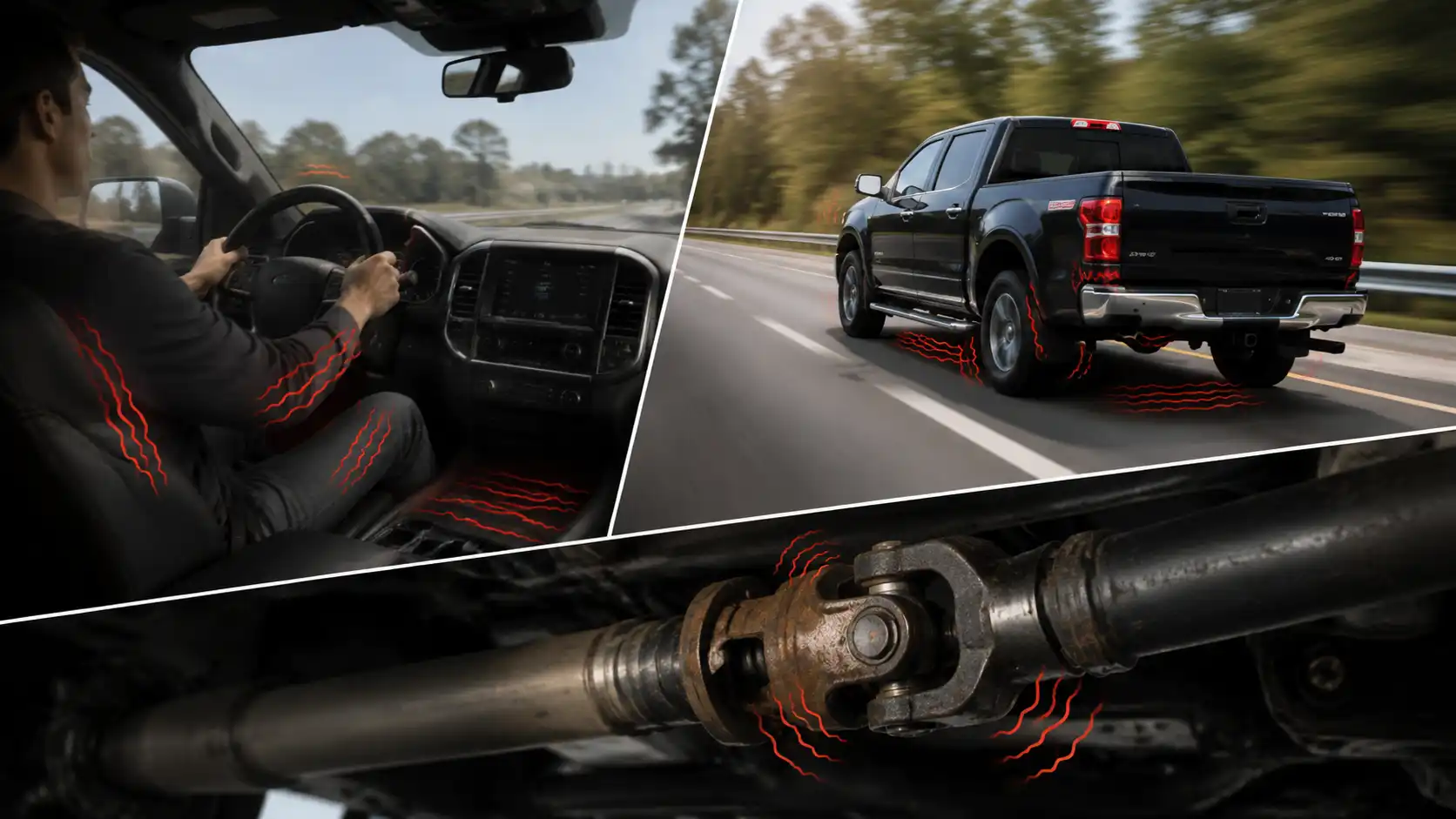
Vibration tends to appear first at highway speeds during steady cruising or light throttle conditions when the driveline should rotate smoothly. It often becomes more noticeable during longer periods of constant-speed driving.
In the early stages, the vibration may be subtle and can be mistaken for tire imbalance or wheel related issues. However, it generally increases with vehicle speed rather than remaining constant. Unlike tire or wheel problems, U-joint related vibration is closely associated with driveline rotation and load variation rather than road surface conditions.
Squeaking Sounds at Low Speeds
Squeaking is often heard during low-speed driving situations such as parking, tight turns or stop-and-go traffic. It becomes more noticeable when suspension movement changes the driveline angle under light load conditions.
The sound typically starts intermittently and gradually becomes more frequent as lubrication inside the joint deteriorates. Unlike brake related noise, U-joint squeaking occurs during rotation and does not depend on braking input, especially at low speeds.
Driveline Shudder During Acceleration
Driveline shudder usually develops during moderate to heavy acceleration, especially when climbing hills or carrying additional load. Short vibration pulses may be felt as torque passes through a worn joint.
At the beginning, the condition may present as a slight hesitation before becoming more pronounced under higher load. Unlike engine misfire or transmission slipping, U-joint shudder is directly tied to driveline load transfer and increases with acceleration demand.
Excessive Driveline Play
Excessive driveline play tends to show up when shifting between Drive and Reverse or when applying throttle after coasting. A noticeable delay or looseness can be felt at low speeds where driveline engagement should normally be immediate.
This represents the final stage of wear, where internal clearance has increased enough to allow visible movement before engagement. Unlike CV joint issues that typically produce clicking during turns, U-joint wear appears as longitudinal slack in the driveline and worsens with repeated torque reversal.
If you notice any of the symptoms above, don't ignore them. You can do a simple DIY check by hand, or have a mechanic inspect it. Either way, early diagnosis helps you decide if a u-joint replacement is needed and saves you from costly repairs later.
What Causes a U-Joint to Fail?
Understanding why U-joints fail is just as important as recognizing the symptoms. Addressing the root cause during replacement ensures the new joint lasts its full service life and prevents repeat failures.
Lack of Lubrication
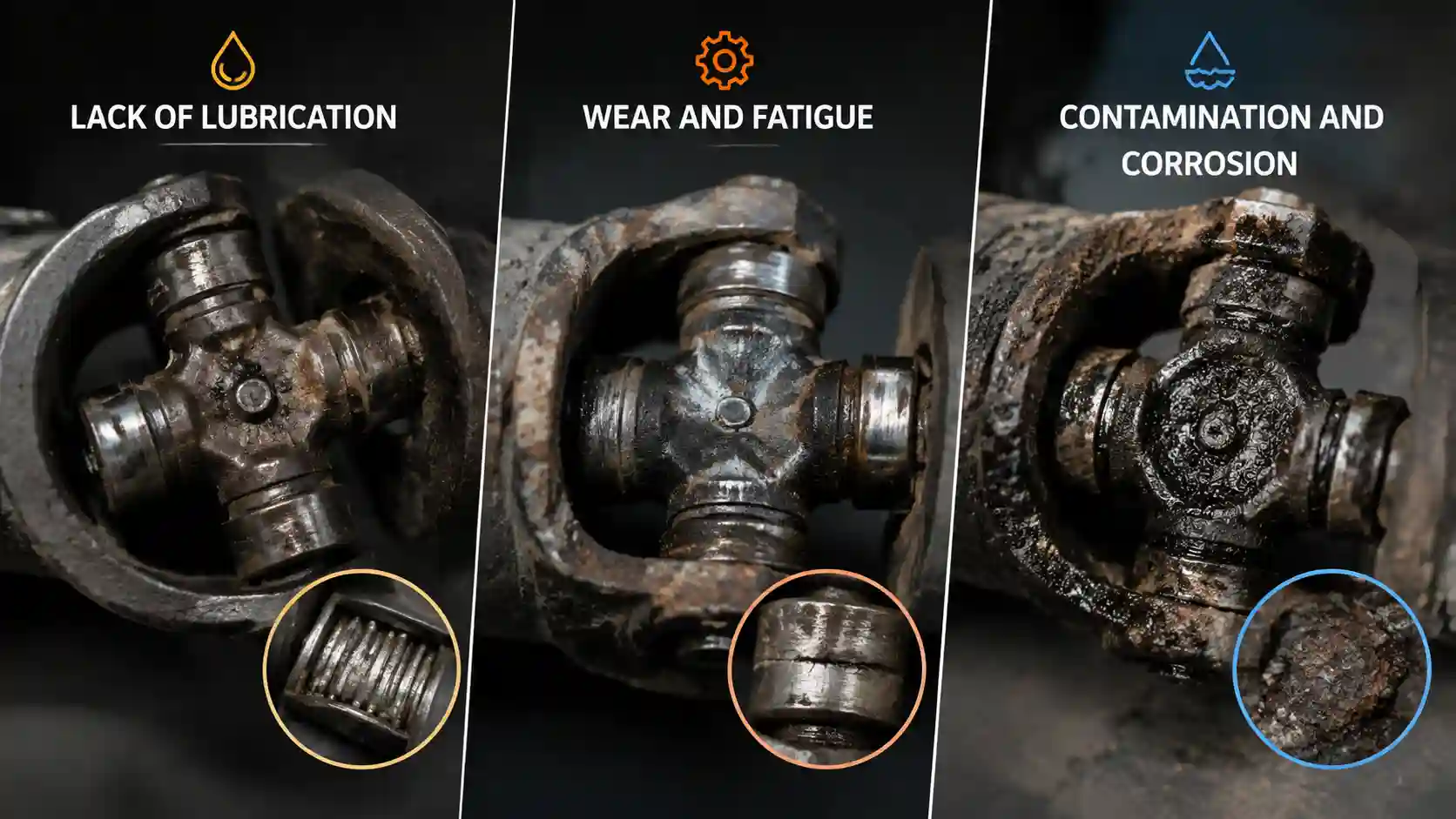
Lubrication is essential for the needle bearings to work smoothly. Without it, metal parts grind against each other, causing heat and rapid wear. Greaseable joints often fail from neglected maintenance. Sealed units can fail when a broken seal lets lubricant escape and contaminants enter.
Even with proper greasing, vibration can force grease out, and extreme heat can break it down. Both conditions leave the joint unprotected.
Wear and Fatigue
U-joints naturally wear out over time from constant flexing and torque transfer. This process speeds up under severe conditions like frequent towing, off-road driving, or aggressive acceleration. High loads and steep operating angles put extra stress on the joint, causing it to fail much sooner than under normal use.
Contamination and Corrosion
Dirt, moisture, and road salt destroy U-joints when seals fail and let them inside. These contaminants mix with grease to form an abrasive paste that wears down bearings and the cross. Over time, this leads to pitting, corrosion, and weakened metal. Loose or missing bolts, often from corrosion or vibration, can also cause sudden failure.
Impact on Vehicle Performance
A bad U-joint can significantly affect overall vehicle performance because it is responsible for transferring power through the driveline. As wear increases, it can lead to uncomfortable driving conditions such as excessive noise, vibration, and instability, making the vehicle less predictable and less safe to operate.
Aside from these noticeable driving symptoms, more serious mechanical issues may also occur:
- A damaged or disconnected driveshaft. If the U-joint fails completely, the driveshaft may separate while driving, potentially leaving the vehicle stranded and causing severe underbody damage at higher speeds.
- Fluid leaks from drivetrain seals. Excessive movement in the driveline can place stress on transmission, transfer case, or differential seals, leading to oil leakage and reduced lubrication.
- Accelerated wear of drivetrain components. Continuous vibration and imbalance can damage bearings in the transmission, transfer case, or differential, often leading to costly secondary repairs or rebuilds.
To avoid these issues, it is important to replace worn U-joints as early as possible to maintain safe and reliable vehicle operation. High-quality replacement parts help restore stable driveline performance. For reliable aftermarket solutions, Zeke Parts provides precision-engineered universal joints with OE-level fit, supporting both standard series and custom development, including cross-referenced OE equivalent models such as Spicer, GMB, SKF, and Neapco.
Frequently Asked Questions
How long can you drive with a bad U-joint?
If symptoms like noise or vibration are present, you should seek repair immediately. While you might manage a very short, low-speed trip to a nearby shop (within a few kilometers), the risk of driveshaft failure or detachment increases significantly as the condition worsens.
Can bad universal joints cause transmission problems?
Yes. Continuous vibration can destroy the transmission output seal, leading to fluid leaks and much more expensive transmission repairs.
How often should u-joints be inspected?
It is recommended to inspect U-joints during every routine service or oil change, and more frequently for vehicles used for towing, off-road driving, or heavy loads.
Conclusion: Don't Wait, Inspect and Fix It Early
Though the U-joint is a small part of the chassis, it plays a critical role in vehicle safety and driveline performance. Recognizing bad U-joint symptoms early is essential, as even minor noises can indicate developing mechanical issues that may lead to costly damage if ignored. Early inspection and replacement help ensure stable, reliable, and safe driving.
Choosing a reliable universal joint manufacturer is key to ensuring consistent quality, durability, and long service life. Zeke Parts delivers precision-engineered universal joints designed with high-strength materials and strict manufacturing standards, providing dependable performance for demanding driveline applications. If you are looking for suitable solutions or need assistance selecting the right product, feel free to contact Zeke Parts for professional support and consultation.
Contact Us