
A failing U-joint can cause clunking noises, vibrations, squeaking, and other driveline problems that affect vehicle performance. Once these symptoms appear, replacing the U-joint is often the best way to prevent further drivetrain damage.
U-joint replacement cost can vary significantly depending on the vehicle, U-joint type, labor rates, and other factors. This guide breaks down the typical replacement cost, explains what influences the final price, and highlights the warning signs that indicate it’s time for a replacement.
Table of Contents
Signs Your U-Joint Needs Replacement
The universal joint, or U-joint, is a small but vital component that connects your driveshaft to the transmission and differential. If you suspect your drivetrain is acting up, paying attention to specific auditory and physical cues is essential. Learning to recognize bad U-joint symptoms can save you from costly repairs down the road.
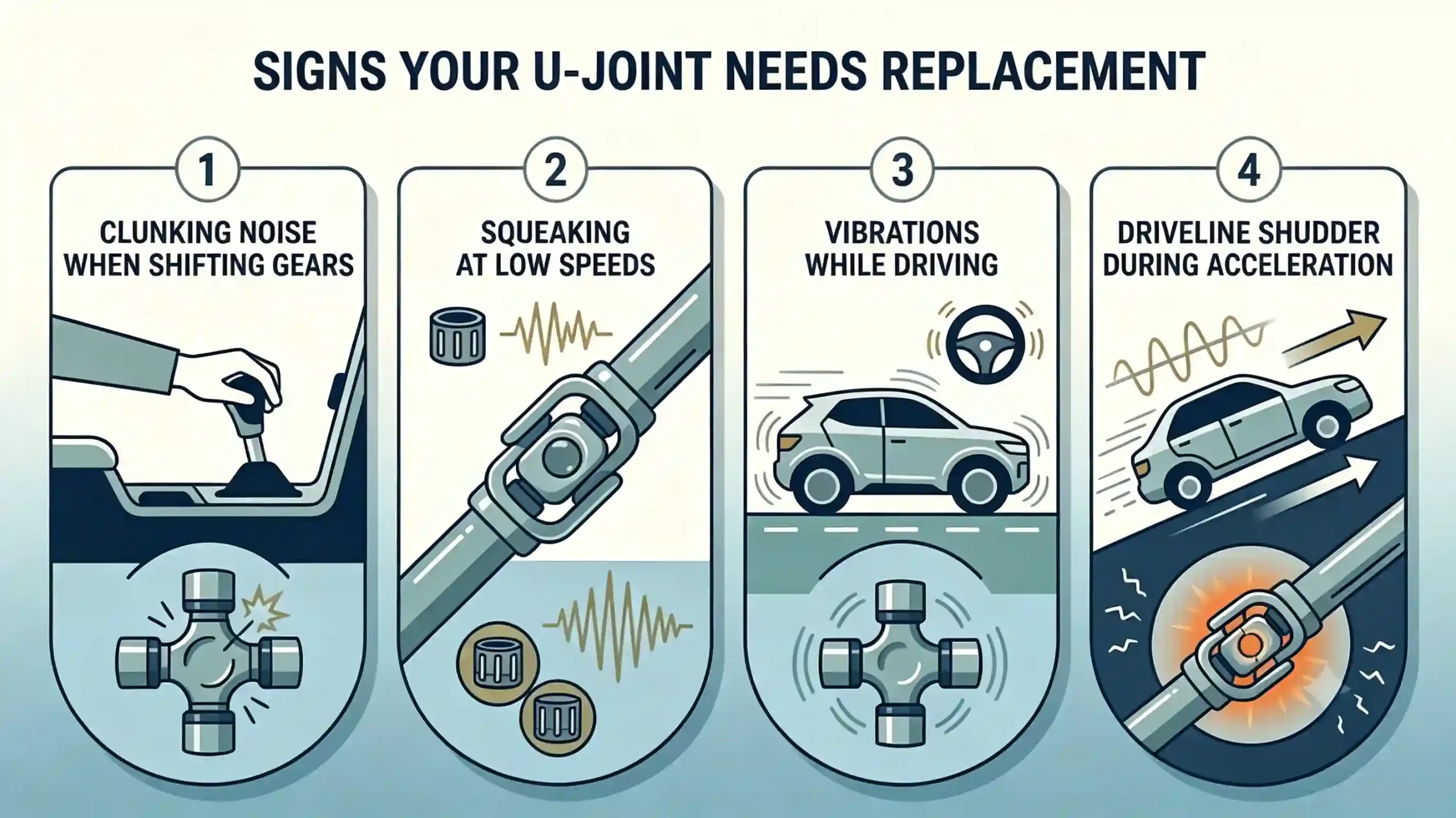
- Clunking Noise When Shifting Gears: Excessive play inside a worn U-joint often creates a loud clunk when shifting or accelerating. The noise usually becomes more frequent as wear increases.
- Squeaking at Low Speeds: A rhythmic squeak or chirp that gets faster with vehicle speed is a common sign of dry or worn needle bearings. Replacing the U-joint early can prevent further damage.
- Vibrations While Driving: As the U-joint wears, it can throw the driveshaft out of balance and create vibrations that become more noticeable at higher speeds. The vibration may be felt through the floor, seat, or steering wheel.
- Driveline Shudder During Acceleration: Instead of delivering power smoothly, a worn U-joint can cause the drivetrain to shudder during acceleration or when climbing a hill. Ignoring this symptom may lead to additional driveline wear.
Can You Drive with a Bad U-Joint
You may be able to drive only a very short distance with a bad universal joint, but it is not safe and should be repaired as soon as possible. There is no reliable way to predict how long it will last, because a worn joint can fail suddenly and leave you stranded or cause more damage. Here are the main risks to watch for:
- The driveshaft may disconnect or drop.
- The vehicle may lose power to the wheels.
- Severe underbody damage may occur.
- You may lose control of the vehicle.
In short, driving with a failing U-joint is a gamble not worth taking. The cost of a tow truck and potential transmission or exhaust repairs far outweighs the expense of a timely replacement.
How Much Does It Cost to Replace U-Joints
The total cost of drive shaft U-joint replacement depends on a few key factors. In the sections below, we'll walk through the average price you can expect to pay and then explain how much of that goes toward parts versus labor.
📌Please note: All figures below are estimates based on third-party data and are for reference only. Always request a written quote from your mechanic before authorizing any work.
Average Universal Joint Replacement Cost
Most U-joint replacements typically cost between $250 and $400, depending on the vehicle and repair method. RepairPal estimates a slightly higher average range of $337 to $414 for many late-model vehicles. Here are estimated costs for some of the most popular vehicles:
| Vehicle Model | Estimated Total Cost | Source |
|---|---|---|
Jeep Wrangler JK | $336–$410 | RepairPal |
Toyota Tacoma (2011) | $314 | YourMechanic |
Chevrolet Suburban | $462–$537 | RepairPal |
Ford F-250 Super Duty (2012) | $218 | YourMechanic |
BMW X3 (2008) | $665 | YourMechanic |
Dodge Ram 2500 | $222 | YourMechanic |
Labor typically makes up the largest portion of the bill. Actual costs vary by location, shop choice, and whether additional components, such as yokes or carrier bearings, also need to be replaced.
Parts and Labor Cost Breakdown
The total cost of a U-joint replacement comes down to 2 main components: parts and labor. Here is a breakdown of typical price ranges based on industry data:
| Cost Component | Typical Range | Notes |
|---|---|---|
Parts (per U-joint) | $30–$150 | Aftermarket parts typically run $30–$80, while OEM or heavy-duty options can cost $100–$150. |
Labor (removal and installation) | $100–$400 | Labor time ranges from 1 to 3 hours at shop rates of $90–$170 per hour. Rusted or complex components may add time. |
Additional Services (if needed) | Varies | Driveshaft balancing, carrier bearing replacement, or yoke replacement may add $50–300. |
What Factors Affect the Cost of Replacing a U-Joint
Not every vehicle pays the same price for a U-Joint replacement. Even for the same job, the cost to replace a drive shaft u-joint can vary significantly due to several key factors. Below are the most common reasons why repair costs differ from one vehicle to another.
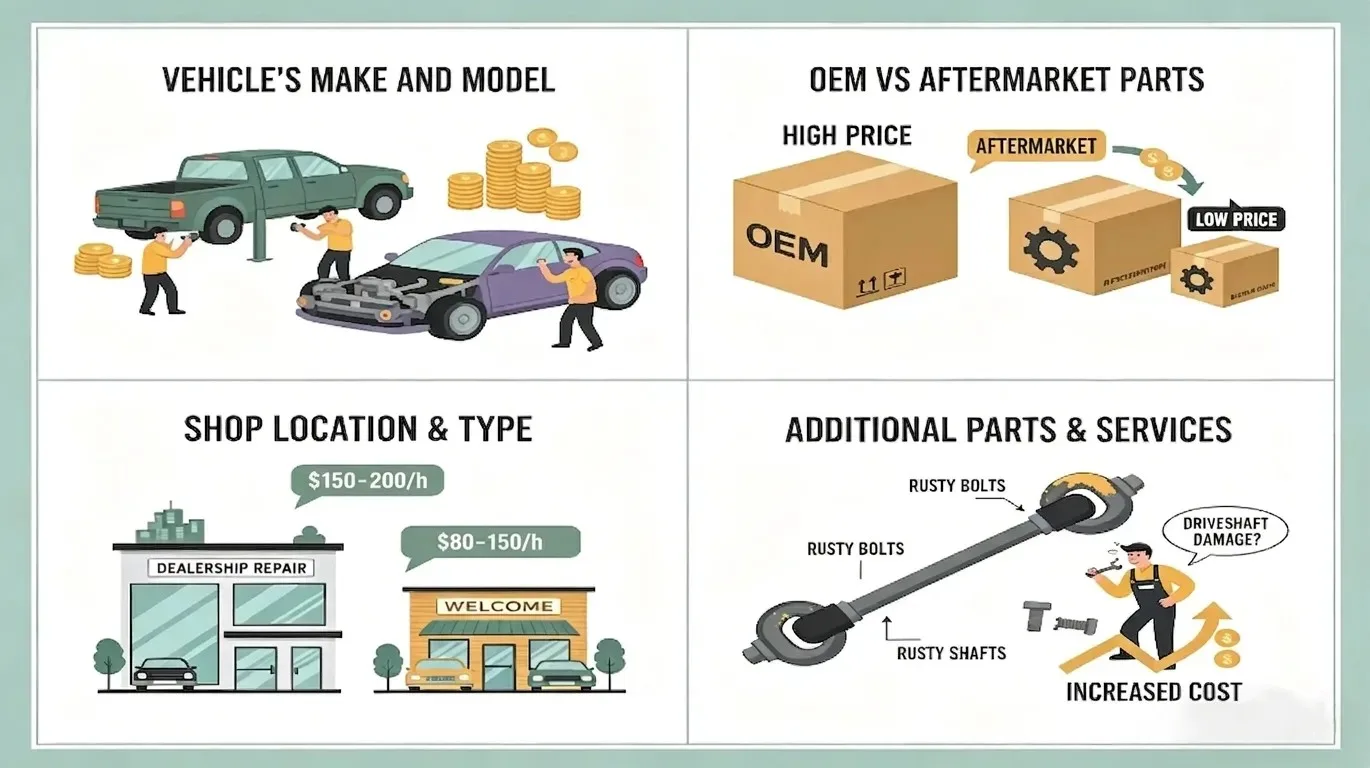
- Vehicle’s Make and Model: The design of your vehicle’s drivetrain plays a major role. Some cars and trucks have easily accessible U-joints that can be replaced in under an hour. Others require removing exhaust components, crossmembers, or even the entire driveshaft, which adds significant labor time.
- OEM vs Aftermarket Parts: Original Equipment Manufacturer (OEM) parts are typically more expensive but offer guaranteed fit and quality. Aftermarket parts are more affordable and easier to find. For example, Zeke Parts provides aftermarket U-joints designed for direct fit, reliable performance, and OE-like quality at a better value.
- Shop Location and Type: Dealerships usually charge the highest labor rates, often $150 to $200 per hour. Independent repair shops are more affordable, typically costing $80 to $150 per hour. Rural shops may charge less than those in major cities due to lower overhead costs.
- Additional Parts and Services Required: Rust, seized parts, or broken bolts can turn a simple U-joint replacement into a much bigger job. A failing U-joint may also damage the driveshaft itself, which increases both labor and cost.
Beyond these cost factors, choosing a reliable U-Joint manufacturer is equally important. A well-made U-joint from a trusted brand ensures proper fit, consistent performance, and longer service life, which means fewer replacements down the road. While it may cost a bit more upfront, the long-term savings and peace of mind make it a worthwhile investment.
DIY vs. Professional U-Joint Replacement
Deciding whether to replace a U-Joint yourself or hire a professional comes down to cost, time, and skill level. The table below compares the key differences to help you make an informed choice.
| Comparison Factor | DIY Replacement | Professional Replacement |
|---|---|---|
Tools Needed | Basic hand tools, press or hammer and socket set | Specialized tools including hydraulic press and torch |
Skill Level | Moderate to advanced mechanical ability | Professional training and experience |
Time Required | 2 to 5 hours or more | 1 to 3 hours |
Cost | $30 to $150 (parts only) | $250 to $600 (parts and labor) |
Ideal Scenarios | Older vehicles, simple drivetrains, minimal rust | Modern vehicles, heavy rust, complex access, or warranty needs |
Best For | Budget conscious owners with time, tools, and a suitable workspace | Owners who value convenience and guaranteed results |
If you have prior experience with driveline repairs and already own the necessary tools, DIY can save you a substantial amount. However, for vehicles with heavy rust, limited working space, or complex drivetrain layouts, professional installation is often the safer and more practical choice.
Tips to Save Money on U-Joint Replacement
A little planning goes a long way when it comes to keeping repair costs under control. Follow these tips to get the job done right without overspending:
- Address squeaking or clunking noises immediately to prevent a minor repair from turning into costly transmission or driveshaft damage.
- Choose quality aftermarket U-joints from reputable suppliers with strong warranties and positive reviews, as they offer similar durability to OEM parts at 30–50% lower cost.
- Replace both U-joints on the same driveshaft at the same time to avoid paying for duplicate labor later.
- Opt for greaseable U-joints if you drive a truck, off-road vehicle, or in harsh conditions, and sealed units for normal daily driving.
- Have your drivetrain inspected regularly, as U-joints typically need replacement between 80,000 and 120,000 miles.
When it's time for a replacement, ZekeParts offers OEM-grade quality U-Joints at aftermarket prices. Greaseable and sealed options are both available. If you are unsure which part fits your vehicle, you can request a sample to verify fitment before purchase. Contact us for more information. We will get back to you within 24 hours.
Contact UsFAQs
How often should U-joints be replaced?
Many U-joints can last well over 100,000 miles, but the actual lifespan depends on driving conditions. Heavy towing, off-road use, water exposure, and lack of lubrication can all speed up wear. Regular drivetrain inspections are the best way to catch problems early and replace U-joints only when needed.
How long does U-joint replacement take?
A professional shop typically takes 1 to 3 hours, with labor charged at 0.75 to 1.5 hours for standard driveshaft joints. Front axle joints on 4x4 vehicles can take 2.5 to 3 hours. DIY jobs usually run 2 to 4 hours, depending on experience and tool access.
What are the differences between sealed and greaseable U-joints?
Sealed U-joints are maintenance-free and good for daily drivers. Greaseable U-joints have a fitting for adding grease and last longer in trucks or off-road vehicles. If you are looking for high-quality sealed u-joints or greaseable u-joints, ZekeParts offers both types, along with high-strength materials and long-term reliability.
Summary
A failing u-joint is a repair that should not be ignored, as it can lead to catastrophic driveline damage. By recognizing the early signs like clunking, squeaking, or vibrations, you can handle the repair proactively. Understanding the u-joint replacement cost ahead of time helps you budget and avoid surprises.
Whether you choose to DIY with high-quality parts from ZekeParts or visit a local mechanic, replacing your U joints on time ensures a smooth, safe ride and protects your vehicle from far costlier future repairs.